


Asian Students’ Film Conference Wayne Wang Masterclass – On Finding a Balance, Avoiding Conflicts and Working with Eels
© 2026 TIFF
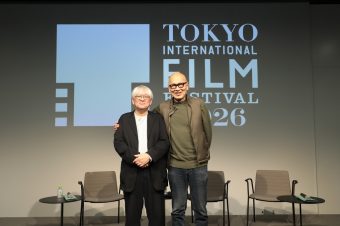
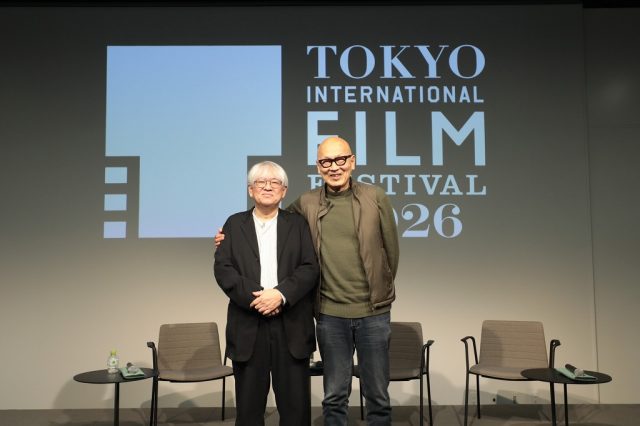
From left: Ichiyama Shozo (Programming Director, Tokyo International Film Festival) and Wayne Wang (Filmmaker)
From left: Ichiyama Shozo (Programming Director, Tokyo International Film Festival) and Wayne Wang (Filmmaker)
Acclaimed director Wayne Wang, whose latest film, Diary of a Mad Old Man, is screening in the Gala Selection of the 39th Tokyo International Film Festival, sat down with TIFF Programming Director Ichiyama Shozo on November 2 to discuss his illustrious filmography, his preference for independent productions, his reliance on master shots and his tactics for avoiding creative conflict on set. The masterclass was filled with young filmmakers who were taking part in TIFF’s Asian Students’ Film Conference, a competition of live-action and animated works under 60 minutes that were recommended by film schools across Asia.
The pioneering Hong Kong-American director, producer and screenwriter was one of the first Chinese-American filmmakers to gain a major foothold in Hollywood, although most of his films are independently produced, and one of the first to focus on contemporary Asian-American culture and life, as in classics like Chan Is Missing (1982), Dim Sum: A Little Bit of Heart (1985), Eat a Bowl of Tea (1989), The Joy Luck Club (1993) and A Thousand Years of Good Prayers (2007). In Japan, his name immediately evokes the Harvey Keitel/William Hurt–starring comedy Smoke (1995), a Silver Bear winner at the Berlinale, and in more recent years, the Japan-set While the Women Are Sleeping, starring Kitano “Beat” Takeshi (2016).
Wang returned to Japan nearly a decade later for his provocative new adaptation of Tanizaki Junichiro’s final novel, Diary of a Mad Old Man, which stars Lily Franky as Utsugi, a wealthy kimono dealer whose life is upended by a stroke that leaves him partially paralyzed, and Fan Bingbing (who won the Best Actress Award at the 2010 TIFF) as his Chinese-born daughter-in-law Susu, with whom Utsugi develops an increasingly obsessive attraction. As their relationship grows more intimate and ambiguous, Utsugi’s unabated sexual desires collide with his failing body, while Susu’s motives remain tantalizingly uncertain. Blending dark humor, erotic tension and psychological complexity, Wang’s film offers an unusually candid portrait of late-life sexuality. Koichi Furuya’s evocative cinematography draws on Tanizaki’s fascination with light and shadow, also contributing to the atmosphere of sensuality and uncertainty.
Ichiyama, who is the film’s producer, began the discussion by asking Wang how the project began.
“I love Tanizaki. I love all the books he’s written,” said the director. “My wife read ‘Diary of a Mad Old Man’ first and she said, ‘It’s not so good.’ I know it’s a difficult book to read and to translate into film, because a lot of it is about [Utsugi’s] sickness. At the time, I was already friends with [Ichiyama] Shozo, and he encouraged me to adapt the book into the movie. He and another producer both helped me get to this point. It took four and a half years. It was not an easy thing to do.”
Prompted Ichiyama, “Actually, the first idea was to cast a foreign actor and then a Japanese woman in the daughter-in-law role. If they were in the film, it would’ve been very different.”
Wang nodded. “At one point, Brian Cox and Gabriel Byrne were involved in the film. But one night when I was [ailing], I had a fever dream and I thought this might become a bad film like Marlon Brando’s Sayonara (1957) in Japan. So I told Shozo that I wanted to cast someone like Lily Franky instead.
“I’d been coming to Japan and Tokyo a lot and I was beginning to see that many Chinese have moved here and married Japanese men. That was part of my consciousness, and I heard that Fan Bingbing was interested in doing this part. I respect her a lot because she was shut out by the Chinese, but she decided to keep on working in independent films. Shozo and I talked and we decided to change the role of the daughter-in-law to a Chinese.”
Ichiyama stressed, “I think this kind of role is very challenging for actresses. We did auditions with many Japanese actresses, but maybe because it’s erotic, it’s not easy to find the right actress in Japan. So when you first offered Fan Bingbing the role, what was her reaction?”
“When I first heard about her interest, I was really worried,” admitted Wang. “Most of the independent films she did were when she was younger, but then she did a lot of big costume dramas and she’s very fashion conscious, so you see a lot of pictures of her in very fashionable clothes. But when I talked with her, she had just finished a Korean film, Green Night (2024), in which she’d played a lesbian. She was very good, very authentic, she didn’t look like a big star, she looked like a real actress.
“She explained to me how she saw the daughter-in-law and had a very good understanding of the character. She didn’t see her as a weak woman, she wanted to project her strength. [In the film], Susu was more manipulative with Lily-san’s character than you would expect, and at the end, she starts to [empathize with him].”
After Fan Bingbing was attached, Wang started working with Lily Franky, globally famous for Kore-eda Hirokazu’s Like Father, Like Son (2013) and Palme d’Or-winning Shoplifters (2018), whom he’d worked with previously.
Said Wang, “He was a supporting character in While the Women Are Sleeping, and I really enjoyed how he improvised a lot of scenes. I was very attracted by how humorous he was in a very Lily Franky way. I didn’t allow him to do a lot of improvisation [in Diary of a Mad Old Man], but there’s a scene where he talks about how his son came to him to ask about masturbation, and he improvised that.
“I remember when I came to Tokyo to prepare, and Lily-san called me and said we have to sit down and go through every page of the script and make it really authentically Japanese. And there were cultural, aesthetic things that he contributed a lot to. He explained that with the older generation of Japanese, they believed they should put a Buddha [drawing] on their feet when they die, since they would then follow the path of Buddha. In the scene where he’s painting his daughter-in-law’s feet, he explained that [concept]. Also, Lily’s emphasis on the spirituality of the feet in this context is very important. It’s not just a sexual thing, in the end, it’s also a very spiritual thing.”
Apologizing for the film’s small budget, Ichiyama said, “It’s my fault, since as a producer I should’ve found more money, but you didn’t have such a big crew and you shot in a very independent style. Why did you make this on a small budget and independently?”
Replied Wang, “There’s always a part of me, since Chan Is Missing, which I made for $10,000, that I want to be able to do small, independent films. But here, I could do it with Shozo’s help, and the line producer Mr. Koga, and lots of young students who just graduated from film school — they’re so much more enthusiastic and they have a lot of ideas that make it really special.”
Ichiyama noted, “If we went to film studios or TV stations, we could get more money. But probably there would have been a lot of demands from the investors. This way, we could make the film freely.”
“I think that’s something special,” Wang emphasized, “especially at my age, when I can’t make many more films. So for this one, I didn’t want someone telling me how to change even one cut. I wanted to have the artistic freedom to make the film I wanted to make. Shozo supported that and I really appreciate it.
“When I worked on While the Women Are Sleeping, I understood how the Japanese work. I have great respect for them, but it’s impossible to get them to change anything at all without people getting really upset, because they’re all studying the script and they know the setups. [The crew] never told me this [at the time], but afterward, we went to a baseball game. They got drunk on beer and really gave it to me. So this time, I told Shozo that I really wanted to be able to change things on set if I wanted to.”
“The eel scene, for example, was not in the script,” recalled Ichiyama. “Suddenly Wayne told the crew that they had to find an eel, and they were scouring the market.”
Explained Wang, “That scene was an idea from the younger crew and that was their idea. I asked them how I could make the scene more interesting sexually and they had that idea, which was combined with the book’s opening scene about Kabuki. As Shozo said, to find a live eel in the morning when all the restaurants were closed was not easy. Finally, they found one that was only half-alive and we used that.
“I have to give a lot of credit to Lily-san. I was really afraid to give him the idea. But he was very open and said he would try. With Bingbing, she showed me some commercials she’d done in China, where she was dressed as a man, so that was the image we went for. One of the hardest things about the scene is that you can’t easily hold an eel.”
Turning to the students in the room for questions, Wang was asked about his favored shooting style. He explained, “I’ve become more favorable to master shots over the years because you can let the actors be themselves more and you don’t have to worry about matching them. I take two master shots so I can cut in between them. I hated, in the studio system, that you had to cover so many closeups. If I had five people around a dinner table, it would take me two days to shoot all the coverage. With master shots, which I think are really the most important thing in making a film, you can shoot quickly. Ozu also used master shots and just moved in when necessary.”
A student asked why he had stressed having flexibility on set. “It’s important because I believe the script is a bible. On Smoke, I worked with two really good actors and they followed the script to the word, but they would bring life to their characters by expressing things differently. You can never use adjectives with these great actors. William Hurt would tell me, ‘If you want me to be angrier in this scene, you need to tell Harvey Keitel to do something that makes me angrier.’”
Wang also stressed the importance of balance: “The main balance is between the visuals and the actors’ [performances]. In [Diary of a Mad Old Man] I only used the narration because the book is narrated. I don’t like narration and don’t like to use it. And I hate movies that overemphasize visuals. Cinema is a visual art, but it’s also about people, so you have to balance the two. The visuals have to work hand-in-hand with the actors.”
Asked how he avoids creative conflict on set, the veteran director said, “That’s a really tough question. There are always creative conflicts on set. To avoid them as much as possible, you talk it through with the actors beforehand a lot, so you’re in agreement. Once they’re [on set], you have to try to balance [new conflicts], maybe give an actor another take so he can do what he wants to do. But conflict will always come up.”
Finally, Wang turned to the act of filmmaking: “I think that today, a film student has no excuse to not make a movie. With the iPhone, with all the lights and technologies, you can do it with almost no money. You just need to make friends with a good casting agent who can get you five or six actors who aren’t famous. Or you can use AI actors, although they’re pretty boring. You really have no excuse. I tell students, ‘Just go out and do it.’
“I keep asking myself why I should make a film at all. The world is really screwed up right now. If I had children, I would be really, really scared. The weather’s changing, politics are changing, people believe only in making more money and being successful. There are all kinds of bad things going on everywhere.
“So what do you make a movie about? Throughout my whole career, I’ve made films about people in a very simple way, usually about two people connecting in some way. And if you look at Diary of a Mad Old Man, the emphasis is on two people who are very different, who are both lonely in their own ways and in the end, connect emotionally. For me, that’s the basic gene for trying to do something about the world.”
Asian Students’ Film Conference Wayne Wang Masterclass
Panelist: Wayne Wang (Filmmaker)
Moderator: Ichiyama Shozo (Programming Director, Tokyo International Film Festival)
Diary of a Mad Old Man directed by Wayne Wang












Recent News