


“Until the Day Ends” Q&A – Opposites Attract in a Real-World Political Firestorm
©2026 TIFF
The Asian premiere of the Serbian film Until the Day Ends took place on October 31 at the 39th Tokyo International Film Festival, and in a fortuitous twist, it had been only six days since former Serbian president Aleksandar Vučić conceded defeat to a student-led protest movement in snap parliamentary elections. The film, playing in TIFF’s Competition section, is set against and concerns these anti-government student protests.
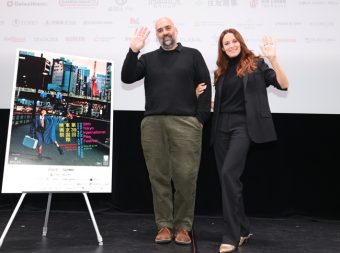
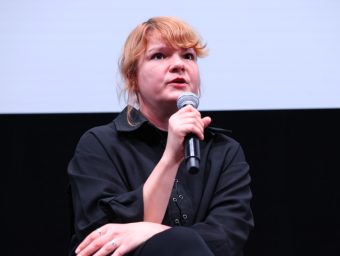
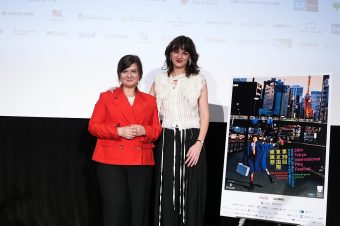
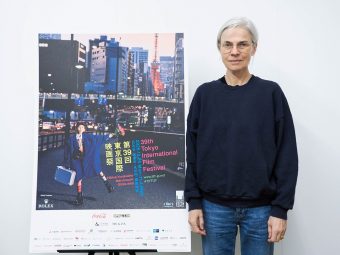
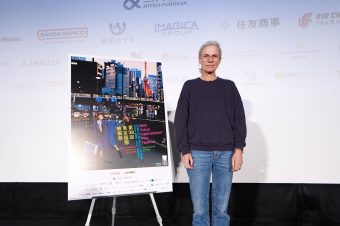
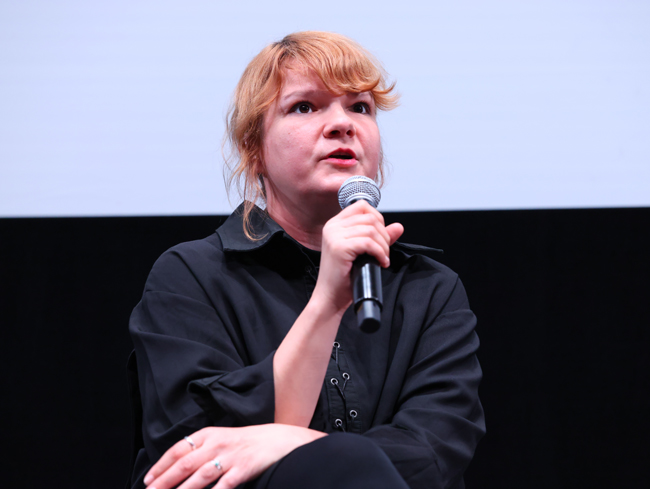
The first-time director of the film, Jelena Maksimović, was on hand to answer the audience’s questions after the premiere, and mentioned the news in her opening comments.
“It’s great that the students won a few days ago,” she said, “but it will take a lot of time to fix things in our country. There have always been protests, ever since I was born, so I knew when I started this film five years ago they would be the backbone of the story. In fact, I am quite interested in anarchism, so when we started shooting it was very difficult to get financial backing.”
Until the Day Ends mainly focuses on one student protester, Rena, who we see planning with her progressive friends and then carrying out actions against government forces in the street. Her conservative family, in particular her right-leaning brother, object to her activism, but eventually she hooks up with a friend of her brother, Stefan, who also leans right but is attracted to Rena nonetheless. When the going gets tough after a particularly violent demonstration, the two get going, hoping to find an idyll away from the turmoil.
The audience did not pursue political questioning, and the first questions expressed admiration for the film’s formal aspects. One viewer said he was particularly impressed by the creative camerawork and wondered why the director chose a standard frame ratio.
“We had a reason for everything,” Maksimović said. “Or, at least, I hope we did. We used that ratio to depict the oppression that the students were under in the city by compressing them within a smaller frame. We also used flares and broken lenses in order to increase this feeling of urban tension. That way, when the story enters the latter part, where the characters are in a natural environment, it has a more calming effect on them.”
The flares and reflections on the camera lens were evident in almost every scene throughout the film, and another viewer wondered if it was actually on purpose.
“It was,” said the director. “I got the idea from experimental films of the 1960s, and from French cinema, where they often damaged things consciously in order to reflect something wrong with the characters or the politics of the time.”
Maksimović also said she was influenced by Asian cinema, in particular Ozu Yasujiro, Hou Hsiao-hsien and Tsai Ming-liang. “I think of them when I’m coming up with images, accenting certain things in certain contexts.”
One woman said she had visited Serbia as a student 30 years ago and found the people very warm and welcoming. She wondered how that national character was reflected in the film.
“That’s a complicated question,” said Maksimović. “I wanted to depict many layers of society. Politically, we wanted nuanced views, and I don’t know if that resonates with non-Serbians, but there are many different positions shown in the film, from anarcho-syndicalism to religious orthodoxy. The thing is, I don’t like working in black-and-white, because these things are always complex, so we intentionally left things vague and loose.”
Another member of the audience commented on the odd way the film directed the viewer’s gaze. Often the protagonists would look at or comment on something that the camera never showed.
“We were really interested in off-space—what’s going on around the characters without actually showing it,” said Maksimović. “That way we play with the expectations of the audience, like in the bar scene when there are lots of closeups, and though you expect to see Rena, instead you see the man who is threatening her. In the end, we were just interested in doing different things, and I don’t know if we succeeded, but we tried.”
Competition: Until the Day Ends
Q&A Guest: Jelena Maksimović (Director/Screenplay)












Recent News