


Academy in Tokyo: Special Talk – The Future of Global Cinema Is Now
© 2026 TIFF
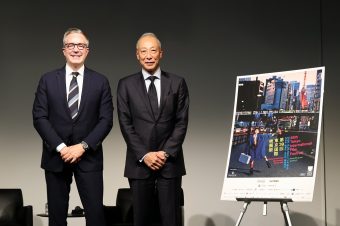
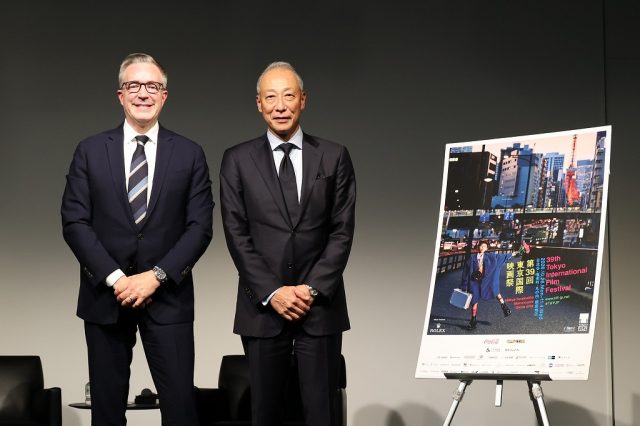
Photo from left: Bill Kramer (CEO, Academy of Motion Picture Arts and Sciences), Matsuoka Hiroyasu (President and CEO, Toho Co., Ltd.)
Photo from left: Bill Kramer (CEO, Academy of Motion Picture Arts and Sciences), Matsuoka Hiroyasu (President and CEO, Toho Co., Ltd.)
Academy of Motion Picture Arts and Sciences CEO Bill Kramer and Toho President and CEO Matsuoka Hiroyasu explored the future of global cinema in an October 29 conversation at the 39th Tokyo International Film Festival. Part of the Academy in Tokyo program, the discussion, moderated by Festival Director Hisamatsu Takeo, ranged from the theatrical comeback and streaming to international audiences and the two organizations’ global ambitions.
Is Moviegoing Recovering—or Changing?
With worldwide box office revenue in 2025 estimated at $33.6 billion, still below pre-pandemic levels, Hisamatsu asked whether cinema was recovering or undergoing a more fundamental shift. Kramer pointed to renewed enthusiasm among Millennials and Gen Z for the communal experience of moviegoing. “It’s really about having an authentic experience,” he said. The Academy has also launched its Marquee Theater list, recognizing 50 theaters worldwide, to support exhibitors and encourage audiences back to cinemas.
Japan has outperformed many other markets, with its 2025 box office reaching approximately 105% of the 2019 level. Matsuoka credited not only hits such as Demon Slayer and Kokuho but also industry cooperation during the pandemic: distributors supplied older titles, Studio Ghibli rereleased films, and exhibitors reassured audiences about safety. “I believe the record box office figures we’re seeing now were built on that foundation,” he said. Even without another extraordinary hit, he suggested, 2026 could become Japan’s third-highest-grossing year.
Kramer recognized a parallel in the United States, where screenings of classic cinema, including at the Academy’s own theaters, attract audiences while introducing younger viewers to film history.
Can Streaming and Theaters Coexist?
Kramer reaffirmed the Academy’s commitment to theatrical exhibition, including expanded Best Picture eligibility requirements for theatrical runs, while recognizing streaming’s ability to bring emerging filmmakers, diverse voices and international films to broader audiences. “Both can coexist,” he said. “Nothing replaces going to the movies.”
Matsuoka agreed that streaming was another evolution in viewing technology, following television, video and Blu-ray. Toho has not fundamentally altered its filmmaking approach in response. More consequential, he suggested, is the influence of social media on how films are discovered: strong word of mouth can propel a hit, while other deserving films struggle to find an audience.
Are Subtitles and National Borders Becoming Less Important?
Hisamatsu cited the success of Parasite, Japanese animation, Godzilla and China’s Ne Zha 2 as evidence of the growing reach of non-English-language films. Kramer agreed that younger audiences are increasingly willing to explore films beyond their own languages and familiar categories. Twenty-five percent of Academy members now live outside the United States, compared with around five percent a decade ago.
Matsuoka offered a counterpoint to Japan’s domestic success. Japanese productions now account for roughly 70–75% of the market, but “a healthy market is one in which domestic films and films from other countries are properly balanced,” he argued, calling for greater diversity between animation and live action, blockbusters and independent films.
The subtitled U.S. release of Godzilla Minus One overturned an old assumption. “We’ve always heard that Americans don’t read subtitles,” Matsuoka recalled colleagues saying. Its success, like that of Parasite, made excuses for not exporting Asian films harder to sustain. Kramer laughed: “And we’re getting better about subtitles in America, I promise. I promise.”
With Asia accounting for approximately 40% of global box office in 2025, Kramer called the region an important market for the world and the Academy: “You’ll see us here more and more often.”
What Would Bring More International Productions to Japan?
Matsuoka welcomed increasing interest in shooting films and series in Japan but identified the lack of a predictable tax incentive system as an obstacle. Rather than negotiating subsidies individually, he advocated financial assistance for productions meeting clear criteria. The weak yen and Japan’s appeal could then make the country more competitive. International shoots, he added, would allow Japanese and overseas crews to exchange production methods and expertise.
Who Should Set the Theatrical Release Window?
For Kramer, studios are rediscovering the value of making a theatrical opening an event before moving a film to streaming. Even Netflix, he observed, has experimented with longer windows and box office reporting. Cinema exposure can create awareness that benefits later viewing at home.
Matsuoka maintained that companies should decide their own windows and reaffirmed Toho’s theatrical-first policy as both respect for filmmakers and a way to build commercial value. Toho generally waits four months before home release, while group company Toho-Towa handles imported studio titles that may reach streaming after about 47 days.
“Even within our own group, we already have a double standard,” Matsuoka admitted. Kramer promptly joked, “So the headline is going to be, ‘Toho has a double standard.’ You heard it here first.” Both nevertheless saw theatrical and streaming distribution as complementary rather than mutually exclusive.
How Is AI Changing Filmmaking?
The discussion also turned to artificial intelligence and its implications for filmmaking. Kramer noted that AI’s impact varies across professions, from screenwriting and visual effects to postproduction. The Academy is examining its different applications, including production-assistance tools and generative AI, while remaining committed to human creativity as the foundation of filmmaking and the central value celebrated by the Oscars®. Its rules, he acknowledged, may evolve as the technology develops.
Matsuoka placed AI within a longer history of technological change, from the transition to digital filmmaking to advances in visual effects. But its potential reach, he suggested, is far greater. With technology advancing so rapidly that today’s rules could soon become obsolete, he emphasized the need for ongoing industry dialogue and individual responsibility rather than fixed answers.
How Are the Academy and Toho Expanding Globally?
“That’s one of the reasons we’re here in Tokyo,” Kramer said of the Academy’s international strategy. Beyond the Oscars®, its year-round work encompasses education, preservation, talent development and festival partnerships. He pointed to the Academy Museum’s opening Hayao Miyazaki exhibition, international outreach and increasingly global Oscar nominations. At the most recent ceremony, he said, all 24 categories included international representation, with non-U.S. films nominated in 18. Membership initiatives, including Aperture, seek to recognize accomplished film professionals beyond Hollywood.
Matsuoka was candid about Toho’s history: “Toho has actually tried to expand internationally several times in the past, and each time we failed.” Earlier overseas offices, cinemas and coproduction initiatives had not succeeded. But Japan’s demographic outlook, the global rise of Japanese animation and IP, and streaming prompted a renewed push.
After meeting U.S. exhibitors concerned about a shortage of films, Matsuoka pursued direct distribution of Godzilla Minus One despite internal doubts. “The more we do, the more we learn,” he said. Overseas revenue has grown from a small single-digit share to more than 10% of Toho’s business; the company is aiming for approximately 30% as international operations become a major source of growth.
What Might This Dialogue Lead To?
“The Academy is best known for the Oscars®, but that’s one night a year. We’re a 365-day-a-year organization,” Kramer said, describing international festivals as essential places to build relationships and share the Academy’s wider mission.
Matsuoka closed by welcoming continued exchange: “We’re very grateful that you’ve come here to learn about us and watch our work. At the same time, we have a great deal to learn from you.” He hoped the visit would “plant the seeds for something wonderful in the future.”
Academy in Tokyo: Special Talk Session
Date & Time: October 29 (Thu) 2:00 pm – 3:30 pm
Venue: Toko Midtown Hibiya Hall
Speakers:
Bill Kramer (CEO, Academy of Motion Picture Arts and Sciences)
Matsuoka Hiroyasu (President and CEO, Toho Co., Ltd.)
Facilitator: Hisamatsu Takeo (TIFF Festival Director)
Speakers’ Profiles

Bill Kramer
CEO, Academy of Motion Picture Arts and Sciences
Bill Kramer is the CEO of the Academy of Motion Picture Arts and Sciences. He oversees all of the Academy’s global operations and programs, including the Oscars®, the Academy Foundation, services for the organization’s 11,000 global members, and the $500 million Academy100 campaign. Prior to becoming Academy CEO, Kramer served as Director and President of the Academy Museum of Motion Pictures, which opened in September 2021, overseeing its curation, fundraising, creative direction, and other aspects of the museum.

Matsuoka Hiroyasu
President and CEO of Toho Company Limited
As CEO of Japan’s leading entertainment company, Matsuoka has spearheaded the exponential growth of Toho’s international business, overseeing the production of global hits such as the Academy Award®-winning Godzilla Minus One and driving the company’s strategic global expansion through key acquisitions, including GKIDS and Anime Limited. Under his leadership, Toho also grossed record earnings in Japan’s domestic box office in 2025. Matsuoka holds an MBA from the University of Pittsburgh and serves on the Board of Trustees for the Academy Museum of Motion Pictures.















Recent News