


“The Intertwining” Q&A – Switched at Birth and in Casting
© 2026 TIFF
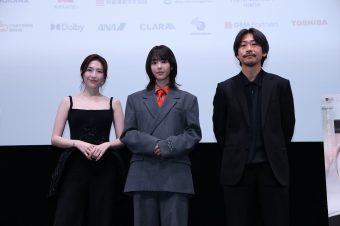
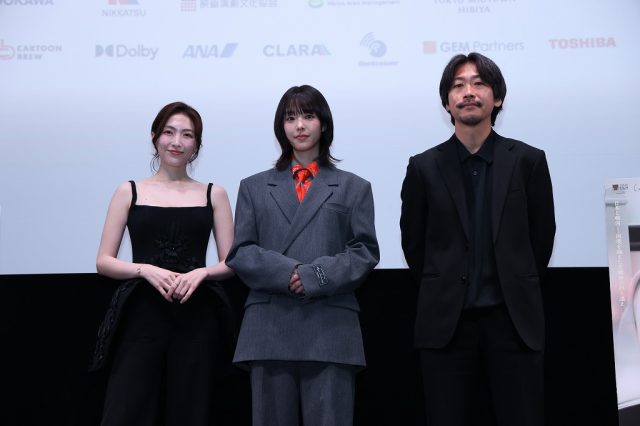
Photo from left: Jiyoung (Actor), Karata Erika (Actor) and Yamamoto Akira (Director)
Photo from left: Jiyoung (Actor), Karata Erika (Actor) and Yamamoto Akira (Director)
For followers of Japanese cinema, the question What if you are accidentally switched at birth and raised by non-biological parents? is not a new one. A similar theme was explored in Kore-eda Hirokazu’s Cannes award-winning film Like Father, Like Son (2013). But emerging filmmaker Yamamoto Akira’s third feature takes a different approach: rather than focusing on the struggles of the parents, as Kore-eda’s film did, his new work movingly explores how it affects the children.
Selected for the Competition section of the 39th Tokyo International Film Festival, The Intertwining had its world premiere on October 29. After the screening, Yamamoto attended the post-screening Q&A session with his two leading actors, Karata Erika and Jiyoung, who portray two university friends, one Japanese and the other Korean, who are each feeling a sense of displacement—whether from family, country or society at large—before discovering that they were switched at birth.
What is especially unique about The Intertwining is its casting: Karata, a Japanese actor, plays the role of Ji-hyun, and Jiyoung, a Korean actor, plays Nanako. “When I first got the offer for the project,” explained Yamamoto, “they [the actors] were already attached to the project as the main characters, and the roles were allotted to them in the way they are cast now.”
Yamamoto admitted he had some second thoughts about this, “but if I really thought about the roots of the novel this film is based on, Ji-hyun is a Korean who is brought up in Japan as a Japanese, and Nanako is actually a Japanese, but she’s brought up in Korea. I thought this casting would really work better.”
Despite the director’s intentions, the actors did have some concerns about playing characters of different nationalities from their own. Said Karata, “Actually, I had acted in Korean before, but I never had to play a Korean national. So I was really worried. I went to Korean language school for six months to train and to really be fluent in Korean.”
Facing similar challenges, Karata and Jiyoung supported each other. “Because I had to speak Korean and Jiyoung had to speak Japanese, and we’re not native speakers of those languages, we became each other’s teachers, and we really supported each other,” said Karata.
Through these experiences, the two lead actresses developed a close friendship over the course of filming. Jiyoung recalled, “Actually, this film was pretty much shot chronologically. It was the first time for me to work with Karata-san, but we grew closer and closer as we filmed. And just like these two characters, by the time we got to Korea to shoot, we were almost like sisters.”
Given the film’s central question of what constitutes a family, the cast members were naturally led to reflect on their own family values. For Jiyoung, “When I was doing this film, I felt very warm about my family, and this feeling stayed with me. So this experience made me want to go back to Korea and see my parents. Even if you’re not related by blood, like these two characters, their destinies might have changed, but their environment has the power to constitute a family. So, even if you are unrelated by blood or even if your nationality changes, these things are important, but not the most important thing.”
Competition: The Intertwining
Q&A Guests:Yamamoto Akira (Director), Karata Erika (Actor), Jiyoung (Actor)













Recent News