


“Earthlings in Love” Q&A – Standing Tall Against Adversity
©2026 TIFF
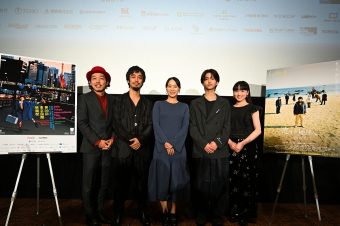
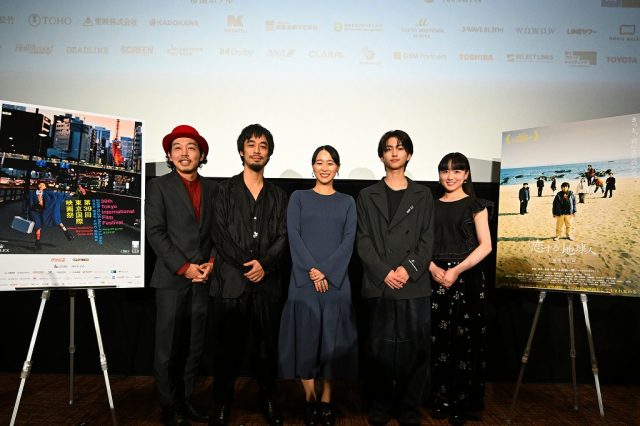
Photo from left: Ueda Shinichiro (Director), Kato Shinsuke (Actor), Kiyose Yaeko (Actor), Suzuse Ibuki (Actor) and Adachi Kono (Actor)
Photo from left: Ueda Shinichiro (Director), Kato Shinsuke (Actor), Kiyose Yaeko (Actor), Suzuse Ibuki (Actor) and Adachi Kono (Actor)
Having created an international phenomenon with One Cut of the Dead (2017) and showcased diversity in genre and style in the years that followed, vertical filmmaking was the next frontier for director Ueda Shinichiro. In 2023, he created a vertical short film called Rental Subordinate that won the TikTok Short Film Grand Prix at Cannes. Last year, he followed it up with a 30-part drama made for TikTok called Earthlings in Love. It’s a story about a movie director struggling with young-onset dementia.
The series racked up 60 million views on social media before Ueda decided to re-edit it into a single feature. The October 28 world premiere at the 39th Tokyo International Film Festival marked the first time a feature film shot entirely in vertical format had been screened in one of the festival’s major sections. Ueda, alongside the film’s lead actors Kato Shinsuke, Kiyose Yaeko, Suzuse Ibuki and Adachi Kono, greeted audiences for a special Q&A after the screening. While the rest of the cast didn’t join the session itself, they were in attendance to celebrate the premiere, watching the film from the back of the cinema as the emotion of the drama reached their crescendo, leaving audience members sniffling.
While the rest of the cast didn’t join the session itself, they were in attendance to celebrate the premiere, watching the film from the back of the cinema as the emotions of the drama reached their crescendo, leaving audience members sniffling.
“I don’t know if I was moved by the story or if I was looking back at the memories of the production or if I was emotional because of the reaction of the audience,” Ueda said of his feelings immediately after the premiere. “I was sitting next to Suzuse-san and he was crying hard next to me, so maybe I was influenced by him too!”
“This was the world premiere of the film, so I felt very overwhelmed,” added Kato, who plays the film’s lead, Shinpei. “I feel like the film has finally been completed. It’s a miracle we have a full house here. We all came together to make a film and it became a vertical film shown through social media, and it’s kind of a dream come true to see it shown today in a cinema.”
All of the actors mentioned the audience’s emotional reaction as the climactic moments of the story played out. For Adachi, however, seeing the film’s credits was also a moving experience. To bring the film from phones to the big screen, a crowdfunding campaign had been launched to help finance the new edit and theatrical release. Although the team recently had a chance to watch the film together, this was the first time they’d seen it with the names of the crowdfunding supporters included in the credits, helping them realize just how many people believed in their work.
According to Ueda, the decision to launch the campaign and bring the film to theaters was prompted by the enthusiastic reception the original series received on social media. He explained, “We started shooting this film with no plans to turn it into a movie, and released it on these platforms at a rate of one episode per day. After its release, however, we heard reactions from the audience saying that they would love to see this work edited into a film. I also started to receive calls from cinemas asking if I had any plans to release it as a film. It became something so much more than I initially imagined, and because of that I felt I really wanted to give this work a place in the filmography of my career, which is why we turned it into a feature.”
Earthlings in Love centers heavily on dementia and its effects on a person as they begin to lose their memories. Although relatively rare, dementia can also affect younger people, as it does Shinpei. As part of his efforts to cope with the condition, he begins writing down his recollections, and even visits a special clinic that can record a person’s memories in a viewable video format. After undergoing this process, recalling his childhood crush and the film he never finished, he determines to finally complete the project, hoping it will help stir his earlier memories even as his condition worsens.
The symptoms and experience of living with dementia are central to the film’s story. Ueda drew on many different sources to portray the condition accurately. “We had an advisor for dementia, and we had someone who actually has been diagnosed with dementia on set with us during filming,” he explained. “There’s also a VR application that allows you to experience how a dementia patient experiences the world around them, so we used that to understand the condition and make it feel more real in the film.”
As the film constantly jumps between Shinpei’s childhood and present day, each character was portrayed by two actors. Ueda cast the adult versions of these characters first, then held auditions to find their childhood counterparts. During production, however, the younger actors filmed their scenes first. This allowed them to establish the characters’ habits and quirks, which the older actors could then incorporate into their own performances.
“I shot my part before I could see Kiyose-san’s performance, so I didn’t know how I should play Nagisa at first,” admits Adachi. “So I looked back on one of Kiyose-san’s previous roles to see how she performed. The role I watched was a rather scary performance, though, so it didn’t really work as a reference! Instead, I read the script and understood Nagisa’s role myself and performed the part as best as I could.”
Kiyose mentioned that she was surprised about the similarity in their speaking styles when she saw Adachi’s performance before filming. In scenes where they delivered the same lines, she made sure to match her performance to Adachi’s as closely as possible.
The TIFF audience’s reaction suggests that the experiment of showing a vertical film in theaters can succeed, even after making the leap from the small screen in viewers’ pockets to the big screen of a cinema.
Nippon Cinema Now: Earthlings in Love
Q&A Guests: Ueda Shinichiro (Director), Kato Shinsuke (Actor), Kiyose Yaeko (Actor), Suzuse Ibuki (Actor), Adachi Kono (Actor)














Recent News