


“Double Freedom” Q&A – A Return to Meaningful Minimalism
©2026 TIFF
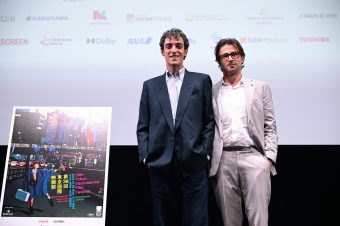
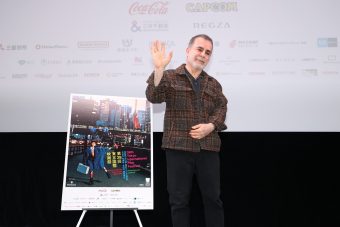
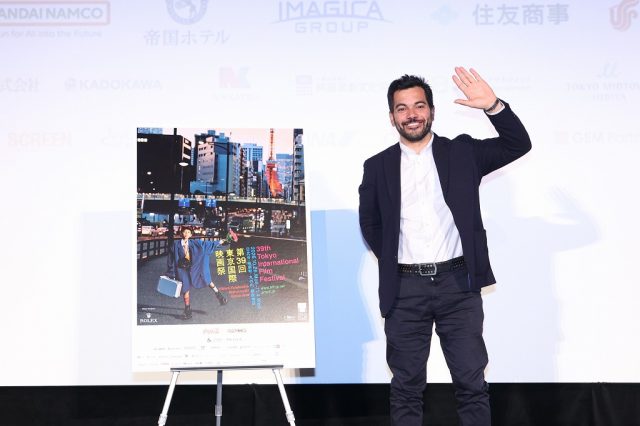
Lisandro Alonso’s Double Freedom received its Asian premiere in the Competition section of the 39th Tokyo International Film Festival on October 28, and while the Argentinian auteur was unable to be there, his co-screenwriter, Juan Méndez, was on hand to discuss the minimalist film with the audience afterward. The Chile/Argentina/Luxembourg/Germany/UK coproduction returns to the scene of Alonso’s 2001 debut Freedom (La Libertad) after 25 years, focusing once again on the life of woodcutter Misael (nonprofessional actor Misael Saavedra, an Alonso regular). So little—and yet so much—has changed since we first met him.
As in the first film, we are immersed in Misael’s seemingly uneventful life in La Pampa immediately. We see him cutting and eating meat straight from the grill, we see him patiently chopping down a tree, pausing to relieve himself in the woods, playing with his dog—all of which are familiar to those who watched Misael’s debut on screen. He’s older now, of course, but he is still strong, lithe and living alone in the forest, self-sufficient and satisfied with the simple pleasures of his existence. But then, Double Freedom throws him into unknown territory: His sister, Micaela (Catalina Saavedra), institutionalized for the past 15 years, comes to live with him when the local psychiatric hospital is forced to shut down. Misael’s life of relative freedom is suddenly and dramatically under assault.
While audiences of Alonso’s films are primed to look for his subtle sociopolitical messages, it’s hard for any viewer not to notice Misael’s precarious working conditions and to extrapolate that many workers in rural areas of Argentina live with great hardships, even in 2026. But it’s also difficult not to fall into a trancelike state, drawn into Misael’s world by the film’s incredible ambient soundtrack, with strange bird and insect songs and snapping branches to match cinematographer Cobi Migliora’s powerful compositions.
The post-screening Q&A session began with a reference to a post-credits scene, in which a much younger Misael laughs for the camera 25 years ago. Asked what inspired Alonso to return to his subject, to make essentially a sequel, Méndez explained, “As Lisandro himself has said, not many people have seen the first film. So it’s a rather unusual kind of sequel. He began dreaming about making it roughly 20 years after the first film. I think one of the main reasons was that his experiences as a filmmaker had gradually taken him away from the simplicity we see in La Libertad. He wanted to return not only to that kind of story but also to that way of making films.
“His previous film was Eureka, which he shot in five different countries. It was an extremely complicated production that took about four months to shoot. Filming had to be interrupted not only because of Covid but also because of a major storm. Part of the film was shot on a reservation in the United States, and the whole process was very demanding. While he was promoting Eureka, he began to feel nostalgic for the way he used to make films.
“So Lisandro came up with the idea of bringing Misael back. But he wanted to introduce a fictional element into his world. That meant bringing in other people, including professional actors.”
He mentioned that Catalina Saavedra, who plays Misael’s sister, is a professional actress from Chile and coincidentally shares the same last name as Misael—they’re not related, although they are very convincing as siblings in the film.
The writer explained that when Alonso invited him to work together, he had only the basic premise. “The first challenge in writing the screenplay was figuring out how to translate the emotional journey Lisandro had in mind onto the page, particularly what would happen once Micaela arrived in the woods. For me, as a writer, the challenge was to serve his particular approach to filmmaking. Lisandro has a very visual, almost sculptural way of thinking about cinema. His films aren’t especially plot driven. They’re much more concerned with sensations and experiences. So the first challenge was not to overwrite the film. We had to leave room for it to breathe.”
But to fund the film, they needed less breathing room. “Somewhat paradoxically, we ended up with a very long screenplay for a film with very little dialogue,” said Méndez. “I think the first draft was about 70 pages long. Everything you eventually see on the screen had to be described in words first. The challenge was to take the reader on that journey through language, about two years before we actually shot the film.”
Asked by a viewer whether there had been any big changes in the transition from script to screen, Méndez explained, “The screenplay had a very clear structure from the beginning. The first half focused on Misael alone, while the second half brought in Catalina Saavedra as Micaela. For us, the second half was actually the most enjoyable part to write because it was something of an adventure. We were putting Misael—not just the character, but the actual person—in a situation where he had to act opposite a professional actress. We wanted to see what would happen when he had to go toe-to-toe with someone like Catalina. We thought she might surprise him, amaze him, or even shock him. We weren’t sure he would have the acting tools to respond to her performance. That uncertainty was part of what made the whole experiment so exciting.”
The biggest changes occurred during the editing process, said Méndez. “Once we started putting the film together, we realized how magnetic Misael was simply doing his work. Watching him, you almost lose your sense of time. There’s something incredibly graceful about the way he works. Twenty-five years ago, this really was his livelihood. Today, he works in construction and no longer lives in La Pampa. He lives closer to the mountains. So even for us, it was surprising to discover how skilled he still was at that kind of work. I think there’s a pure pleasure in watching those opening minutes because you know you’re seeing someone who genuinely understands what he’s doing.”
But Méndez noted there had been an important change during production: “It wasn’t a change to the screenplay itself, but something we had to do because of practical difficulties. Originally, we planned to shoot the scene in which Misael reunites with Micaela at an actual psychiatric hospital in a small town in Buenos Aires Province. This was a very small production. But about a week before filming began, we learned that we wouldn’t be allowed to shoot there.
“We had already visited the facility, and the experience had been quite shocking. But what struck us most wasn’t necessarily what we saw. It was what we heard. There was this constant stream of human voices—people speaking freely, repeating phrases, talking over one another. It created a kind of cacophony, almost a wall of sound. When we learned that we couldn’t film there, it felt like a tremendous loss. We had to find another way to recreate that experience. What we wanted to preserve was the sensation of entering a place where you very quickly lose your bearings. It’s not exactly that you lose your balance, but you lose your sense of perspective. You almost forget the world you’ve just come from.
“That’s what we tried to convey through Misael when he enters the hospital. He seems stunned, almost numb, because of everything surrounding him. I’m sure many people in the audience, just like many of us on the film crew, have had personal experiences with family members or people close to them who struggle with mental health issues. It’s extremely difficult, both to confront those situations and to support someone going through them. If you take away Misael’s pain over the fact that his sister is ill, the experience of visiting that institution is revelatory in itself. Even if you spend only ten minutes there, those ten minutes will stay with you because of what you see and hear. It’s something you simply can’t forget.”
Competition: Double Freedom
Q&A Guest: Juan Mendez (Co-writer)















Recent News