


Tokyo Talk: Nippon Cinema Now “How We Make Films” – Financing Films with Original Ideas
© 2026 TIFF
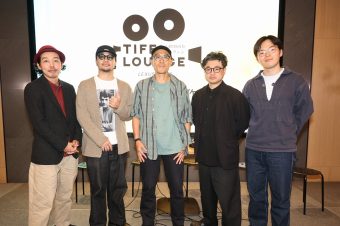
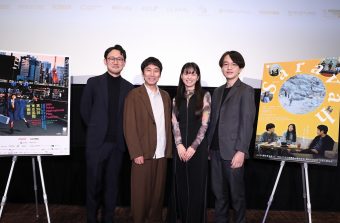
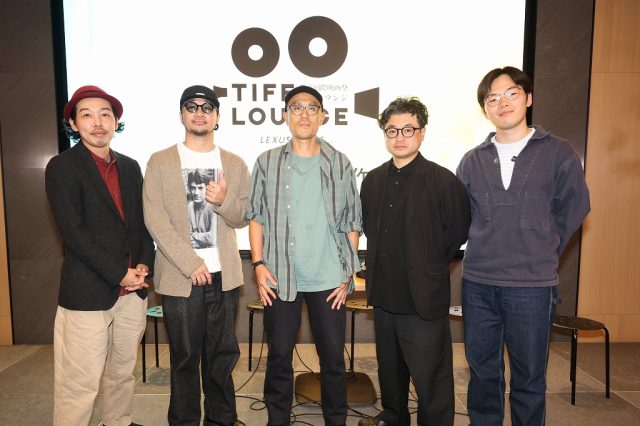
From left: Ueda Shinichiro, Saito Kisin, Natori Satoshi, Matsumura Shingo, Yaza Takenoshin
From left: Ueda Shinichiro, Saito Kisin, Natori Satoshi, Matsumura Shingo, Yaza Takenoshin
For fans of Japanese cinema, the Tokyo International Film Festival’s Nippon Cinema Now section offers an opportunity to discover innovative new films by established veterans as well as emerging talents. The exciting news is that, from the 39th TIFF, the section has become a competitive category with two awards, helping expand the international profile of contemporary Japanese cinema.
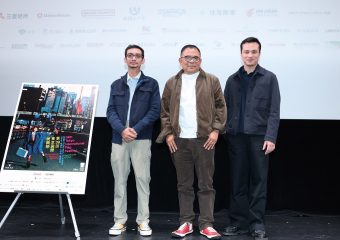
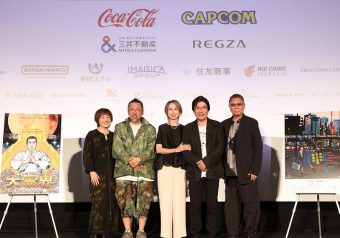
To mark the section’s new competitive status, a special event, Tokyo Talk: Nippon Cinema Now “How We Make Films,” took place during the festival on October 28. Among the nine films in the section this year (eight in competition and one special screening), five filmmakers, Ueda Shinichiro, Saito Kisin, Natori Satoshi, Matsumura Shingo, and Yaza Takenoshin, appeared for the session with TIFF Programming Director Ichiyama Shozo. They shared insights into their creative processes, especially how they have managed to finance films based on original story ideas.
Ueda, director of the box office megahit One Cut of the Dead (2017), shared the experience of making his unconventional film, Earthlings in Love, which began as a 30-episode vertical drama series and has since been re-edited into a feature film. “I started making vertical dramas about three or four years ago,” said Ueda. “At some point, I had the opportunity to work with (telecommunications company) au, which funded a project and asked me to make ten episodes. They were very well received. So last year, they came back to me and asked me to create a full 30-episode vertical short drama, giving me complete creative freedom over the content.”
In contrast to Ueda’s crowd-pleaser, Ichiyama described Saito’s debut feature Kefi was “uniquely strange,” and the kind of film that would be unlikely to attract funding. In response, the director shared how he secured financing while maintaining creative freedom: “I was introduced to an investor who was willing to fund the project,” said Saito. “As for what kind of film it would be, the investor initially had a particular theme in mind, and the plan was to develop the film around that theme. I agreed to that as well, but as we continued discussing the project, they eventually said, ‘You can do whatever you want.’”
Winner of the Grand Prix at the 31st Split International Film Festival, Natori’s Chihiro | Akemi is another debut feature that has already attracted international recognition. But this highly original film was not possible without a fortunate encounter with an investor. “I’m personally financing 60 percent of the budget, and the remaining 40 percent comes from an investor,” said Natori. “I was introduced to this investor through a mutual acquaintance. They’ve always been a huge film enthusiast and have a genuine desire to support various cultural projects. I think they have a real passion for cinema. Because of that, they’ve never put any pressure on me to make the film a hit or even to recoup their investment.”
Matsumura, who has been consistently releasing new features, managed to finance his latest work Between Us, with the support of a Japanese talent agency. He had long wanted to make a film with Kawashima Ririka (They Say Nothing Stays the Same), and an unexpected opportunity arose: “I had a chance to meet for coffee with a producer from a production company I knew. They had previously made a film featuring Kawashima Ririka, and her name happened to come up during our conversation. They suggested, ‘Why don’t you just write a script for her?’ So I went ahead and wrote one.” Matsumura sent the script to Kawashima’s talent agency, and the project was greenlit.
Yaza Takenoshin, who studied philosophy and film at Harvard, meanwhile, took a particularly unusual approach in realizing his debut feature, Hinotama: Ball of Fire. Out of the blue, he sent a direct message to Kitagawa Yoshio, the cinematographer of Hamaguchi Ryusuke’s Evil Does Not Exist, and asked him to meet for coffee. “During our conversation,” said Yaza, “I initially asked questions while going through the script, things like, ‘How much do you think it would cost to make this?’ and ‘What’s the cheapest way to get a camera?’ Then, at the end of our meeting, I said, ‘If you have time, I’d really appreciate it if you could read this script,’ and handed it over. About two weeks later, I got a phone call. He told me, ‘I’d like to shoot this film.’”
The Tokyo Talk event highlighted how the Nippon Cinema Now directors had taken distinctly different approaches to financing their films while retaining originality. According to Ichiyama, “As someone who also works as a producer, I’ve noticed that when you approach the business side of the film industry, people tend to ask questions like, ‘Who’s in the cast?’ ‘What’s the story about?’ or ‘Is it based on an existing work?’ And when you tell them it’s an original story, you can almost feel their enthusiasm suddenly drop. That’s why I think it’s really wonderful to see people continuing to develop and create original projects.”
TIFF Lounge -TOKYO TALK-
Nippon Cinema Now “How We Make Films”
Speakers: Ueda Shinichiro, Saito Kisin, Natori Satoshi, Matsumura Shingo, Yaza Takenoshin
Moderator: Ichiyama Shozo (Programming Director)














Recent News