


39th TIFF Competition Jury: Festival Ranking Matters Less than the Power of a Film to Move Viewers
© 2026 TIFF
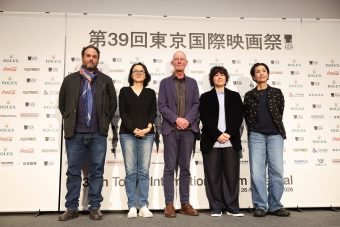
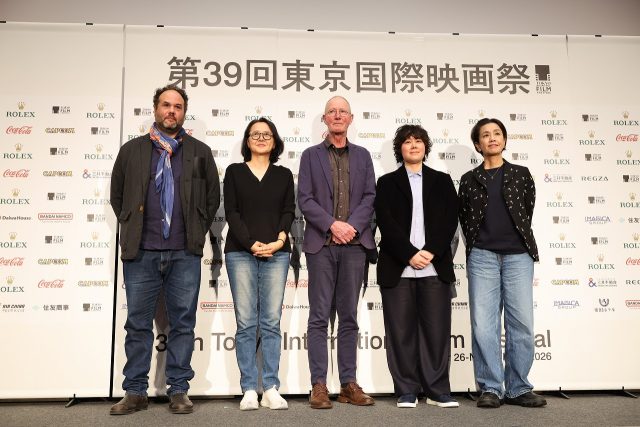
Yov Moor, Oh Jungwan, Rolf de Heer, Alex Lo and Watanabe Makiko
Yov Moor, Oh Jungwan, Rolf de Heer, Alex Lo and Watanabe Makiko
The five members of the 39th TIFF International Competition Jury met the press on October 27, the festival’s second day, to discuss their experiences and impressions of TIFF and what they would look for when viewing the 15 films in competition.
The panel is presided over by Jury President Rolf de Heer, an Australia-based writer, director and producer whose work has been honored with a range of awards, most recently the Fipresci Prize at the 2023 Berlin International Film Festival. He is joined by Tokyo/New York-based producer Alex Lo, whose company focuses on artist-driven films from underrepresented perspectives and on international co-productions, which have screened at Cannes, Venice, Berlin, Toronto, Sundance, Locarno and TIFF, among others; Korean producer Oh Jungwan, who has played a pioneering role in cross-border filmmaking, developing collaborations with filmmakers and industry partners in Hong Kong, Japan, Thailand and other parts of Asia; Japanese actor Watanabe Makiko, a familiar face in both Japanese and international films who has received widespread acclaim for her performances, including the Best Supporting Actress Award at the 55th Asia Pacific Film Festival and the Best Supporting Actress Award at the 7th Asian Film Awards; and acclaimed DI colorist Yov Moor, who has worked on over 200 projects worldwide, from independent cinema to studio features, which have appeared in festivals including Cannes, Venice, Tokyo, Berlin, Sundance, Toronto, Rotterdam, Busan, Hong Kong, and Golden Horse, alongside recognition at the Oscars and Golden Globes.
After brief greetings from each of the guests, the panel was asked to comment on their reactions when invited to join the jury.
De Heer recalled, “I was delighted. I had already been invited to come to accompany a film that I was going to be showing here. But I live so far away and that was only for four days. So when the offer to be on the jury came it sealed my decision. To watch a number of films and talk about them with good and interesting people, I was delighted.”
Mentioning that she’d served as a jury member at TIFF before, Oh said, “I wanted to [come and] watch more Japanese films, but I realized this is a jury for international films. I love watching films in the cinema, so I was very happy to accept the job. I also love Japanese food, and I’m anticipating the wonderful autumn weather, although it was raining yesterday.”
Moor noted, “As a colorist, it’s quite rare to receive this kind of invitation. It was a very great surprise. For people like me who do this kind of work, to be able to be a jury member for a film festival makes me very proud. Some films that I’ve been involved with have been shown here before, but this was like a dream for me.”
Watanabe commented, “It’s nerve-wracking, but I’m excited to have this opportunity to focus on watching films throughout the duration of the festival. When I’m working, I don’t have enough time to go to the cinema to watch films, even though it’s such an important thing to go, and I wind up watching them on streaming. If I have more time, I hope I’ll have a chance to see other films during the festival.”
Said Lo, “I was really excited when I was invited, but I’m a little nervous, too. To be able to immerse ourselves in the theater for ten days, during a time when there’s so much original storytelling, is special. So I’m really looking forward to spending time with these amazing people.”
As for what key points they would be considering in their deliberations, de Heer emphasized, “The single most important thing for me is what I feel. Not what I think.”
Moor concurred, saying, “It’s really about how you’re touched. What I feel and what’s inside me. As a jury member, I will try to see what’s interesting and sincere, but also [think about] what the next film of the director can be.”
Oh commented, “As an audience member, I can just enjoy the film. As a jury member, you have to concentrate on other things. For me, most important is the directing—the way the director tells us [the story]. There are elements like acting and cinematography, but it’s important whether the director is convincing in the story he’s trying to tell.”
Said Watanabe, “I try to watch films without any preconceived notions, and I don’t look for answers while I’m watching. But as a jury member, I have to look for more specific things. I look for what touches or moves me, and later on, I digest and reconstruct how it made me feel.”
For Lo, “I love intellectually challenging movies, and I really enjoy making them. When the lights come up, what I care about is the emotional truth—not just mine, but the characters’. That’s what connects the audience and the film.”
The panel was then asked whether they felt that TIFF’s recent categorization as an “A-list” festival by FIAPF (the International Federation of Film Producers Associations), putting it among the top 17 international festivals, was meaningful or simply redundant.
After considering carefully, de Heer said, “I think Tokyo has always been considered one of those festivals, an ‘A’ festival. So in that sense, it doesn’t make a lot of difference. But categorization seems to be becoming more important in terms of the quality of work available to a festival. It matters a great deal to some people and not at all to others.”
“I don’t really know about this categorization,” admitted Oh, “but as an audience member, we don’t go to a festival because they’re an A-list festival, we go because we want to enjoy the screenings.”
Asked how they would deal with potential disagreements among the panel, de Heer stressed, “It totally depends on the situation, and how divided the jury is. I’m with four other very reasonable people and I’m sure we can find a way that we don’t wind up with a lesser compromise, but with a really interesting film.”
Added Oh, “I’ll fight! I once had the experience of fighting for seven hours with other jury members, and they all hated me. But there are so many good films, so you have to find the right way to compromise. We have a very good head of jury and I hope he’ll give us good guidance.”
The final question, a perennial one from the Japanese press, was “What’s your impression of TIFF?”
Smiling a bit, de Heer responded, “The only impression I have so far is of a lot of people with raincoats, sloshing on the red carpet.”
“Last night was quite impressive!” Oh agreed. “There was a steady rain but there were still a lot of audience members and journalists, so that made a good impression on me. That means everyone has a passion for film and for TIFF.”
Watanabe noted, “I first came to TIFF at the end of the 1990s, when it was still at Shibuya Bunkamura. I was starring in Suwa Nobuhiro’s M/Other (1999) and we arrived in limousines. I was discovered here, and I’ve been learning and growing for many years at this festival. You meet all sorts of people you wouldn’t normally have the opportunity to meet, and you learn so much about different cultures. Cinema brings us together on a special journey.”
Said Lo, “I’ve always felt that TIFF has one of the best [levels of] hospitality among festivals that I’ve attended around the world. The audiences are also very attentive, deeply respectful and they engage with genuine intellectual curiosity.”
Moor added: “The TIFF team is very professional, and they’ve made it comfortable for us to watch the films. Thank you.”















Recent News