


“Shyrmauyq” Q&A – Life and Debt in a Kazakhstan Village

©2026 TIFF
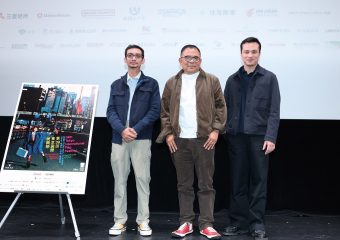
The Kazakh film Shyrmauyq had its World Premiere in the Asian Future section of the 39th Tokyo International Film Festival on October 26, TIFF’s opening day. Director Azamat Shargyn—who calls himself an admirer of the films of Japanese director Ozu Yasujiro and makes his directing debut with the film—was on hand to answer questions from the audience after the screening.
Perhaps because opportunities to see Kazakh films in Tokyo are quite limited, most of the questions focused on Kazakh culture and how it applied to the story, in particular the Muslim religion that has such a strong influence over the characters’ lives.
Shyrmauyq centers on a family in a rural village, specifically the elderly matriarch, Ayimkhan, whose prime concern is her eight-year-old granddaughter, Umit. The girl’s parents, Samat and Gulzhan, are not a happy couple, mainly owing to Samat’s foul moods and poor handling of the household finances. As a result, the family relies almost completely on Ayimkhan’s meager pension, which is stretched beyond its limit.
The situation becomes so bad that Gulzhan leaves the village for the city, where she works in a slaughterhouse, while Ayimkhan struggles to pay back her debts to various merchants. Umit, understandably, is left emotionally adrift and confused.
During the Q&A session, Shargyn explained that Kazakhstan is actually doing well economically right now, thanks to its oil reserves. “But in the countryside, in the villages,” he said, “many people live in debt, borrowing against their pensions. That is the context of the story.”
This matter is illustrated with a subplot involving Umit’s desire for a particular pair of red shoes that Ayimkhan desperately wants to buy for her. The ensuing bargaining with the greedy store owner leads to a nasty brawl later in the movie between Samat and the merchant.
One audience member confessed that he was unsure of the characters’ motivations, as well as the meaning of some of the dialogue and certain actions, thinking they were all culturally determined. Shargyn was reluctant to spell things out. “Those matters have deep meaning for me,” he said, “but as the director, I feel I should not explain them. You should decide for yourself what they mean to you personally.”
While Shargyn refrained from explaining the plot in detail, he did clarify that the river shown in the film played a very important role in the villagers’ lives, because of their spiritual beliefs. “When you die in this village,” he said, “you have to be buried on the opposite side of a body of water from where you lived.”
Another viewer asked whether Shargyn’s goal was to depict the “ugliness” of adults in relationship to Umit’s naive worldview, and the director implied that he had no specific thematic goals. “I did not make this film to showcase the culture of Kazakhstan,” he said, “but rather to show how people in a small village in the countryside live right now.”
Asian Future: Shyrmauyq
Q&A Guest: Azamat Shargyn (Director/Screenplay)














Recent News