


Award Winners on Filmmaking Freedom, the Healing Power of Cinema and the Legacy of Kurosawa
© 2026 TIFF
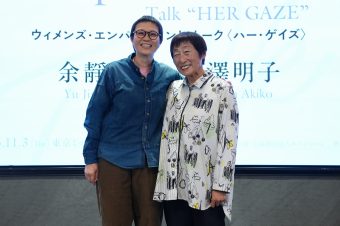
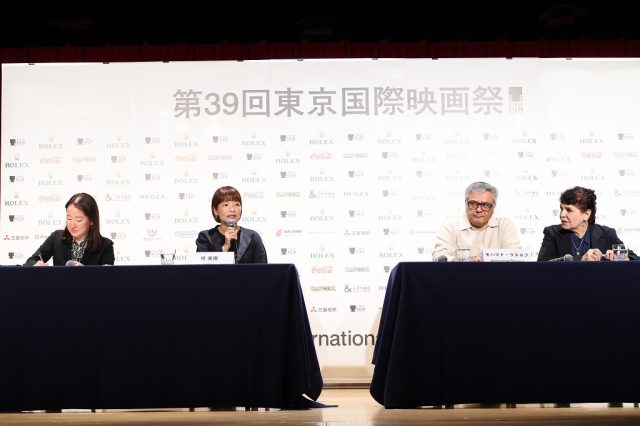
From left: Mohammad Rasoulof (Director) and O Mipo (Director)
From left: Mohammad Rasoulof (Director) and O Mipo (Director)
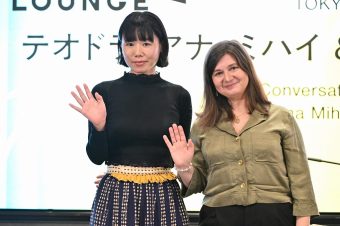
Ahead of receiving the Kurosawa Akira Award at the 39th Tokyo International Film Festival on November 3, Japanese-born Korean director O Mipo and Iranian filmmaker Mohammad Rasoulof sat down with the press to discuss their approaches to filmmaking, the personal and political challenges they have faced, and the enduring influence of Kurosawa Akira.
Although their careers have unfolded under vastly different circumstances, both directors spoke candidly about the experiences that have shaped their work, the difficulties of sustaining a creative career, and their shared belief in cinema’s ability to foster understanding, compassion and hope.
O Mipo: Capturing Children as They Really Are
Asked how she achieves such naturalistic performances from the child actors in her films, O explained that her approach had been shaped by her own experiences as a mother and her dissatisfaction with conventional depictions of children in Japanese cinema. “I’ve made three films about children, and I selected those projects because I didn’t feel that Japanese films were depicting children the way they really are. If I’d been satisfied with previous depictions, I wouldn’t have made my own films about them.
“But after becoming a mother, I began spending every day with children, and I became increasingly fascinated by them. Children are mysterious creatures. They live entirely in the present, responding to whatever is immediately in front of them. They are incredibly pure, yet at the same time they can be extraordinarily cruel.
“Living with my children has constantly stimulated my curiosity and inspired me creatively. I wondered whether I could continue calling myself a filmmaker if I didn’t try to portray children more vividly and authentically than anyone else. I wanted to create something that only I could make—a film that might seem familiar but that, in reality, hadn’t been made before.”
For her latest film, How Dare You?, O began working with children well before shooting commenced, developing their performances through workshops rather than conventional auditions. “For How Dare You? we began meeting children at a very early stage of development. Rather than conducting conventional auditions, we held a series of weekend workshops. We didn’t simply ask them to read lines from the screenplay. We also created situations and activities, almost like games, and observed how they responded. Through that process, I gradually identified the children who seemed right for the world of the film.
“I worked on the screenplay with Takada Ryo, and the dialogue gradually evolved from spending time with the kids. Sometimes it was just a slight change, and occasionally, they would say something far more interesting than anything we adults could have imagined. We incorporated those discoveries into the screenplay.
“People who watch my films sometimes ask whether I secretly kept the cameras rolling to capture spontaneous moments. But actually, it’s quite the opposite. We followed a carefully structured approach, but within that structure, we allowed the children’s natural personalities and expressions to emerge.”
Mohammad Rasoulof: From Metaphor to Direct Confrontation
TIFF Programming Director Ichiyama Shozo noted that Rasoulof had consistently explored social injustice and the oppression of individuals within authoritarian systems. Citing the allegorical quality of the director’s early film Iron Island, Ichiyama asked about his increasingly direct approach in subsequent works.
Rasoulof explained that his filmmaking style had evolved in response to his experiences of political repression. “When I was young, there was a dictatorship in Iran. Under those circumstances, I believed it was better to express myself through metaphor rather than speak directly about the things I wanted to address. This approach has deep roots in Iranian history, culture and literature.
“Throughout our history, poets and writers have used metaphorical language to express their thoughts and feelings, particularly when living under oppressive political systems. For a long time, this was considered the most effective way to communicate ideas that could not be expressed openly.
“But something changed in 2010, when I was imprisoned and sentenced to five years in prison. During my time in solitary confinement, I had a great deal of time to think. I began asking myself why we should have to go to prison simply for making films.
“I also began questioning my own approach to filmmaking. I realized that, in a sense, I had been trying to escape repression rather than confront it directly. I decided that if I was able to make films again, I would no longer use metaphor simply as a means of avoiding censorship or political pressure. I wanted to express myself more directly.”
Rasoulof emphasized that Iranian filmmakers continue to face enormous restrictions, but suggested that a change was taking place in their willingness to challenge authority. “Of course, the Iranian film industry continues to operate under severe restrictions. Filmmakers face censorship, repression and enormous pressure, and many of my friends and colleagues are still living and working under those conditions.
“But I believe something is changing among Iranian filmmakers. Increasingly, they’re choosing to challenge the authorities directly through their work.”
Discovering Kurosawa: From Rashomon to Red Beard
The two directors were also asked about the influence of Kurosawa’s films on their own work.
For O, the first encounter came at university, followed by a deeper appreciation through her work with the late director Obayashi Nobuhiko. “Kurosawa Akira is an extraordinary master of cinema, at a level so high that I could never hope to reach it. The first Kurosawa film I saw was Rashomon, when I was studying filmmaking at university.
“After graduating, I joined the office of the late director Obayashi Nobuhiko, who spoke often of Kurosawa. He had made the behind-the-scenes documentary on Kurosawa’s Dreams. The film itself is about two hours long, but Mr. Obayashi’s making-of documentary is about two and a half hours long. I’ve watched that many times.
“When I see an extraordinary image in a Kurosawa film, I find myself wondering how on earth he achieved it. Then I watch the making-of footage and begin to understand. His films and the documentaries about their production have become something like textbooks for me.
“Apparently, Mr. Kurosawa often said that cinema possesses the beauty and power to bring peace to the world. Now that I’ve reached this stage of my life, I feel more strongly than ever that he was absolutely right. I believe Mr. Kurosawa spent his entire career making films that embodied that fundamental belief. That’s why I’ve always held him in such profound respect.”
Rasoulof’s introduction to Kurosawa came much earlier, through television broadcasts in Iran. “I encountered Kurosawa’s films at a much younger age. When I was a boy, Iranian state television broadcast Red Beard repeatedly. I remember watching it again and again. By the time I was a little older, I must have seen it more than ten times.
“Unfortunately, I never had the opportunity to see it on a large cinema screen. But I think that experience was important not only for me, but also for many other people in Iran who encountered Kurosawa’s films through television.
“Through his films, we were introduced to Japanese culture and to a distinctly Japanese tradition of storytelling. I believe those films had a considerable influence on many of us.”
As he began making films himself, Rasoulof came to admire Kurosawa’s meticulous approach to cinematic storytelling. “I was particularly interested in the way he developed his characters and exercised such extraordinary control over every element of his films. Every image, every detail and every aspect of the storytelling seemed to be carefully controlled. But that control was never simply for its own sake; it gave his stories greater depth and meaning.
“Later, I encountered Dersu Uzala, and it moved me profoundly. For me, it is one of the most deeply humanistic films ever made.”
O Mipo: Putting Life Before Filmmaking
Asked how she had maintained her identity during the years when she was unable to make films, O spoke candidly about the demands of raising her two sons.
“When I had my first son in 2015, I thought I would go back to filmmaking almost immediately. But once I began raising a child, I realized how completely ignorant I’d been about what parenting actually involved. It was far more difficult than I’d ever imagined.
“In a way, filmmaking and raising children are very similar—both require you to think about them 24 hours a day. Then, in 2020, I gave birth to my second son. At that point, I began to think that perhaps my life as a filmmaker had truly come to an end.”
She recalled a turning point in 2023, when actress Ando Sakura spoke at the Japan Academy Prize ceremony about the difficulty of balancing motherhood and filmmaking.
“I was stunned, but at the same time, I felt an enormous sense of relief. I’d often heard actors and film industry people express gratitude to those who had supported them. They would say that although things had been difficult, they’d managed to continue working thanks to the help of the people around them.
“And of course, those expressions of gratitude were genuine. But I’d never heard someone stand up and say so clearly, ‘It’s impossible.’
“I realized that perhaps I was allowed to say the same thing. Perhaps I didn’t have to pretend that everything was manageable. Perhaps I didn’t have to give up my own life and ambitions simply because I had chosen to become a mother.”
That realization gave O the courage to return to feature filmmaking after nine years. She hopes her experience will encourage others in the industry to value their lives beyond work.
“Others in the industry have their own responsibilities and circumstances. Some are caring for elderly or ill family members. Some have personal interests or passions that are important parts of their lives. Everyone has a life beyond filmmaking. I believe that people working in the film industry should be able to value those lives first and then make films.
“Receiving the Kurosawa Akira Award for films that portray children, drawing on my own experiences as a mother, is especially meaningful to me. It means that more people will have an opportunity to see and learn about these films. And it makes me feel that the times really are changing.
“Of course, compared with someone like Mohammad Rasoulof, who has had to confront the political system of his own country in order to make films, the scale of what I’m talking about may seem very small. But I want to continue making films and taking actions that can benefit not only myself but other people as well.”

©2026 TIFF
Mohammad Rasoulof: Cinema as a Refuge
For Rasoulof, the challenges of filmmaking have been inseparable from the political circumstances in which he has lived and worked. Yet he described cinema not only as a means of confronting oppression but also as a deeply personal source of healing.
“My relationship with cinema is perhaps more personal, partly because of the circumstances under which I’ve had to make films. I’ve faced intense censorship, repression and pressure throughout my filmmaking career.
“Because of those experiences, I sometimes feel that cinema itself has become a kind of therapy for me. It’s a refuge, a place where I can heal myself. I’ve never really been conscious of the periods when I wasn’t making films. I feel as though I have always been involved in filmmaking, even when I wasn’t actually shooting a film.
“The films I make are closely connected to the environment in which I live and to the things I observe around me. My films have largely grown out of questions and ideas that emerge from my everyday experiences. Those questions are about the people I encounter in my daily life, and the society in which I live, and eventually they become a subject for my films.
“In that sense, filmmaking has always been something spontaneous for me.”
Despite the enormous difficulties he has faced, Rasoulof said that the impulse to make films has never left him. “Of course, making films under these circumstances is extremely difficult. Almost every time I finish a film, I tell myself that it will be my last. I think, ‘That’s enough. I can’t keep doing this. It’s simply too difficult.’ And for a while, I really believe that.
“But then, after some time has passed, without consciously planning anything, I find myself beginning another film. Filmmaking is simply something that happens within me, something I find myself returning to again and again.”
For both directors, the Kurosawa Akira Award recognizes not only their achievements but also their determination to continue creating despite the pressures that have shaped their lives. Their experiences may be vastly different, but their remarks reveal a shared conviction that filmmaking remains inseparable from the act of living.
Related article:
O Mipo and Mohammad Rasoulof Receive Kurosawa Akira Award at 39th TIFF.














Recent News