


O Mipo and Mohammad Rasoulof Receive Kurosawa Akira Award at 39th TIFF

© 2026 TIFF
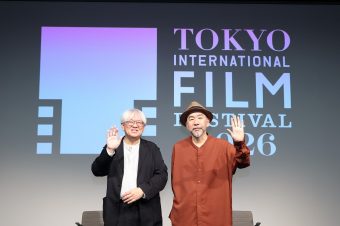
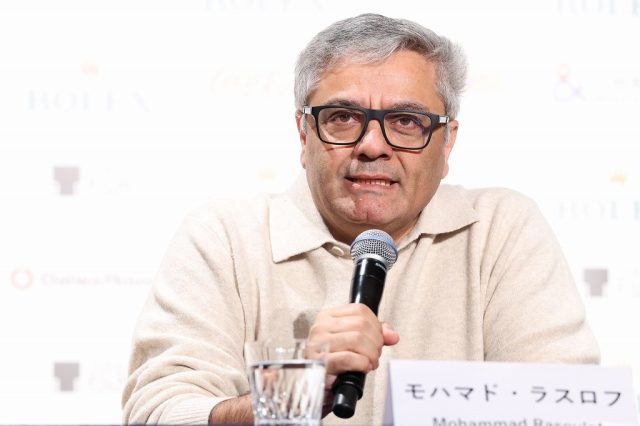
From left: O Mipo (Director) and Mohammad Rasoulof (Director)
From left: O Mipo (Director) and Mohammad Rasoulof (Director)
The two laureates of the 39th Tokyo International Film Festival’s Kurosawa Akira Award sat down with the press on November 3, ahead of the official award ceremony, to discuss their recognition as “filmmakers who have made outstanding contributions to global cinema and are expected to help shape the industry’s future,” as well as the challenges of sustaining a creative career amid personal and political pressures.
The honorees, first announced in September, are director Mohammad Rasoulof (There Is No Evil, The Seed of the Sacred Fig), an Iranian independent filmmaker who has faced censorship, filmmaking bans and imprisonment yet continued to create; and Japan-based director O Mipo (The Light Shines Only There, Living in Two Worlds, How Dare You?), whose work, particularly her nuanced portrayals of children, has been informed by her experiences as a mother.
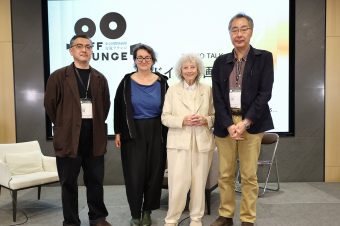
Rasoulof and O were chosen by a selection committee comprising veteran filmmaker Yamada Yoji, who served as chair; director Lee Sang-il, recipient of last year’s Kurosawa Akira Award; acclaimed cinematographer Ashizawa Akiko; and TIFF Programming Director Ichiyama Shozo. The committee recognized O for her multifaceted portrayals of people on the margins of society, particularly children, and Rasoulof for his uncompromising examination of injustice and oppression.
Although their careers have unfolded under vastly different circumstances, both directors spoke about the deeply personal experiences that shape their work and their shared belief in cinema’s ability to foster understanding, compassion and hope.
Two Filmmakers, Two Different Journeys
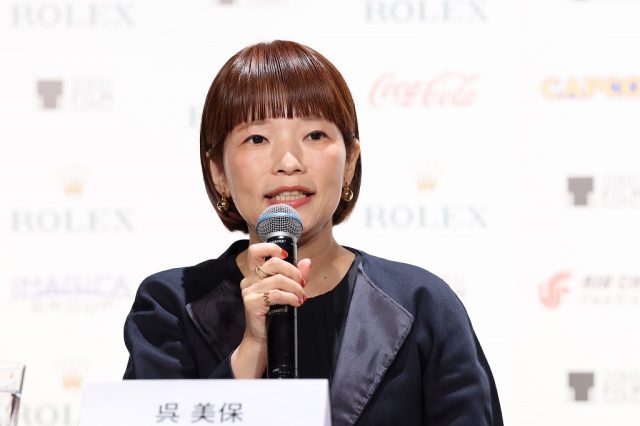
For O, receiving an award bearing Kurosawa’s name initially seemed almost too good to be true. “When my manager first received the notification, we wondered whether there had been a mistake—or even whether it might be an elaborate new scam,” she recalled. “Only after corresponding with the festival did the news begin to sink in. What makes me especially happy is receiving this award alongside Mohammad Rasoulof, a filmmaker whose work I deeply admire. It is both an honor and a humbling experience.”
©2026 TIFF
Rasoulof said receiving the award had particular significance at a time when violence was so widespread throughout the world. “Of all Kurosawa’s films, Dersu Uzala is the one I love most. It is a profoundly anti-violence film, and it has been a great source of inspiration to me.”
Finding the Freedom to Continue Creating
The two directors were asked about periods during which they had been unable to make films, and whether they had worried about not being able to continue.
O recalled that after the birth of her first son in 2015, she had expected to return to filmmaking almost immediately. But raising children proved far more difficult than she had imagined, and after her second son was born in 2020, she began to wonder whether her life as a filmmaker had come to an end. A turning point came in 2023, when she watched actress Ando Sakura speak candidly at the Japan Academy Prize ceremony about the difficulty of balancing motherhood and filmmaking.
“I realized that perhaps I was allowed to say the same thing. Perhaps I didn’t have to pretend that everything was manageable. Perhaps I didn’t have to give up my own life and ambitions simply because I had chosen to become a mother.”
That realization gave her the courage to return to feature filmmaking after nine years. “I want to demonstrate, through my own actions, that filmmakers can put their personal lives first and still make films,” she said.
For Rasoulof, whose filmmaking career has been marked by censorship, imprisonment and political repression, cinema provides a safe haven. “Because of those experiences, I sometimes feel that cinema itself has become a kind of therapy for me. It’s a refuge, a place where I can heal myself.”
He admitted that almost every time he finishes a film, he tells himself it will be his last. But inevitably, another project begins to take shape. “Filmmaking is simply something that happens within me, something I find myself returning to again and again.”
The Enduring Influence of Kurosawa
Both filmmakers spoke of Kurosawa’s profound influence on their work.
O recalled first encountering Rashomon as a university student and later learning about Kurosawa through director Obayashi Nobuhiko, whose staff she joined after graduation. Obayashi had made a behind-the-scenes documentary about Kurosawa’s Dreams, which O watched repeatedly. “His films and the documentaries about their production have become something like textbooks for me,” she said.
Rasoulof recalled watching Red Beard repeatedly on Iranian state television as a child. Later, as a filmmaker, he came to admire Kurosawa’s extraordinary control over every element of his films. But it was Dersu Uzala that moved him most profoundly. “Even today, whenever I feel hopeless or discouraged, I return to Dersu Uzala. Watching it helps me recover my sense of hope.”
©2026 TIFF
An Evening of Recognition and Gratitude
At a black-tie event later that evening, Japanese film industry leaders and notable international guests gathered at the Imperial Hotel for the Kurosawa Akira Award Ceremony.
TIFF Festival Director Hisamatsu Takeo welcomed guests and congratulated the awardees, thanking Capcom Chairman Tsujimoto Kenzo, the award’s sponsor; Kurosawa Hisao and the Kurosawa family; and the members of the selection committee. Noting that Kurosawa’s films continue to move audiences around the world, transcending generations, national borders and cultural differences, Hisamatsu said: “It is a great pleasure and honor to present this year’s Kurosawa Akira Award to two filmmakers who carry that spirit forward into the future: O Mipo and Mohammad Rasoulof. Through their distinctive perspectives and artistic approaches, both directors challenge us to reflect on human dignity and the nature of society.”
Hisamatsu then shared a memory of accompanying Kurosawa to the Cannes Film Festival in 1991, when Rhapsody in August was screened. During that week, he had suggested that Kurosawa make another film like Yojimbo or Sanjuro, two of his favorites. “I can still remember his reply as clearly as if it were yesterday,” Hisamatsu recalled. “He said: ‘Hisamatsu, I know perfectly well that if I made another film like that, it would be a hit. But an artist cannot go backward.'”
Director Yamada Yoji, chair of the selection committee, praised O’s ability to observe human beings accurately and with a distinctive, gentle gaze. Describing How Dare You? as almost magical, he marveled at her ability to capture the inner lives of its young protagonists. Of Rasoulof’s The Seed of the Sacred Fig, Yamada praised its intimate portrayal of an Iranian family confronting the pressures of society and expressed heartfelt support for the director’s determination to continue filmmaking under severe restrictions.
Following the screening of trailers highlighting their work, Rasoulof and O received crystal trophies presented by Capcom Chairman Tsujimoto Kenzo. The awards also come with a cash prize of ¥1 million each.
Words of Gratitude and Hope
In her acceptance speech, O reflected on the filmmakers and collaborators who had sustained her throughout her career. “Among so many films and filmmakers, you found me and my work, including How Dare You? I imagine I am no more than a tiny dot in that vast world. The fact that you found me feels almost like salvation. It makes me think, ‘I’m so glad I kept making films.'”
She recalled the lessons she had learned from Obayashi, who taught her to be grateful for each small thing during filmmaking, and paid an emotional tribute to musician Tanaka Takuto, a longtime collaborator who had died suddenly just two days before she received news of the award. “When I heard about this award, I felt as though Mr. Tanaka was telling me, ‘You have to keep going. Please keep making films.’ I will carry this award with me as a great protective charm, and I will continue to devote myself to filmmaking.”
She concluded by thanking her two sons and her husband, who was looking after them at home.
Rasoulof expressed his gratitude for receiving an award bearing Kurosawa’s name, but acknowledged the difficulty of celebrating while people in Iran continued to suffer. “I do not know how to balance my happiness today with their suffering, or quite what I should say to you. So please allow me simply to offer my heartfelt thanks for this honor. I hope that before long we will see peace and calm, not only in Iran but throughout the world.”
Read more: For a deeper exploration of the filmmakers’ creative approaches, personal challenges and the enduring influence of Kurosawa Akira, see our companion feature,
Award Winners on Filmmaking Freedom, the Healing Power of Cinema and the Legacy of Kurosawa.















Recent News