


TIFF Lounge TOKYO TALK: Teodora Ana Mihai and Sode Yukiko – On Filmmaking, Motherhood, and Finding a Creative Balance
© 2026 TIFF
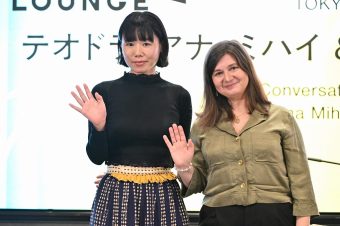
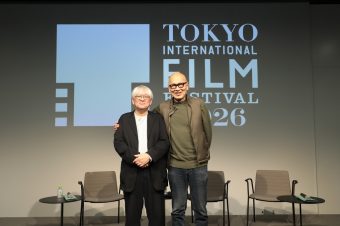
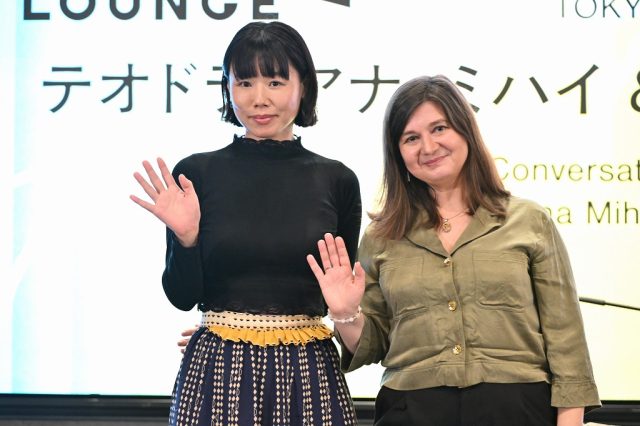
From left: Sode Yukiko (Film Director) and Teodora Ana Mihai (Film Director)
From left: Sode Yukiko (Film Director) and Teodora Ana Mihai (Film Director)
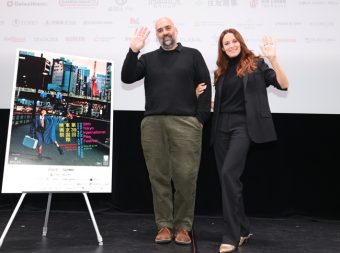
The 39th Tokyo International Film Festival’s new Tokyo Talk series, which brings together industry practitioners to discuss their own and each other’s work and careers, invited two distinctive female filmmakers to a unique conversation on November 2: Belgian-Romanian director Teodora Ana Mihai, who has returned to the TIFF Competition section for the third time with Heysel 85, and Japanese director Sode Yukiko, whose new film All the Lovers in the Night is having its Japan premiere in the Gala Selection section, met to address the issues involved with having a flourishing career as working mothers.
Moderator Kondo Kanako, of TIFF’s Programming Group, began by noting that childcare was being provided at the back of the room, and indeed, the sounds of children were present throughout the talk, lending it a sense of real-worldness.
Mihai commented, “I’m really looking forward to discussing this subject, because it’s something we don’t talk about nearly enough, even though it affects our daily lives, our careers, and our experiences as parents. And it’s certainly not easy.”
Added Sode, “I’m delighted to see so many men in the audience today, more than I expected, actually. Thank you for joining us.”
Kondo noted that Sode had participated in a similar discussion at TIFF in 2021, when she spoke with Indonesian filmmaker Kamila Andini about their careers and the differences between raising children while pursuing them.
“When I spoke here five years ago, I talked about how I’d kept the birth of my second child a secret from the producers I worked with,” recalled Sode. “I was afraid that if people knew I’d just had a baby, they would stop offering me work. I didn’t even tell producers I trusted completely, people I’d worked closely with for years.
“But I do feel that the situation is beginning to change. I’m hearing more and more about female directors slightly younger than me having children in Japan. The same is true of women working on film crews. Five years ago, I don’t think as many women felt that having kids was a realistic option while continuing their careers. Now I can sense a change beginning to happen.”
Kondo addressed Mihai, “Your film La Civil (2021) received the Special Jury Prize at TIFF in 2021, although you couldn’t attend because of Covid restrictions. Then came Traffic (2024), which won the Best Actress Award here in 2024, and now you have Heysel 85, which is screening in Competition. You’ve made three feature films while also having your second child. And anyone who has seen your work knows that these are extraordinarily demanding films. How have you managed it?”
“It’s a daily challenge,” admitted Mihai. “Very early on, I decided that I didn’t want to choose. That was my decision. I didn’t want to choose between motherhood and my profession, which is also my passion. But it wasn’t easy. I was afraid of society’s expectations, the prevailing mentality, and the pressure that came with them. I felt that pressure constantly.
“As a result, I became a mother relatively late. I was 37 when my daughter was born. When I got pregnant, I didn’t dare tell many people in the film business, even people I genuinely trusted. I was censoring myself. I was quite thin at the time, and it was winter, so I could hide my pregnancy under my clothes. Even when I was six months pregnant, I was still adjusting what I wore so that nobody would notice or start talking about it.
“At the same time, I felt terribly conflicted. I already felt like a bad mother because I was hiding something so beautiful and so natural. I realized that this censorship was coming partly from within me, from the mentality I’d grown up with. That’s something we need to change as a society. Mothers and fathers alike need to set different examples and work on changing their own attitudes.”
“It’s striking that you’ve both had such similar experiences,” said Kondo. “The possibility that having children might damage a woman’s career is an enormous burden. For men, it’s usually quite the opposite.”
“Exactly!” said Sode. “When a man says his partner is pregnant, everyone congratulates him and says, ‘Wonderful! Now you’ll have to work even harder!’”
Mihai concurred, “In my case, the male and female experiences were almost exact opposites. On one side, there was pride and no particular anxiety. On my side, it was the other side of the coin entirely. And I realized that I wanted to become an example. I wanted to demonstrate that it was possible to do both, to be a mother and to pursue a demanding career.
“I’d struggled with my own fear and shame, and I’d hidden my pregnancy. But I thought that if I could show that it was possible, perhaps my colleagues and the next generation would have a different experience. And especially because my first child was a daughter, I wanted her to have a different experience from mine.”
Kondo noted that it was unusual for female directors to speak openly about having children in Japan until recently: “Among the generation before Sode-san’s, many women directors chose not to have children. Others shifted from directing into screenwriting or producing after becoming mothers. So the fact that both of you, from roughly the same generation, are beginning to set similar examples in Europe and Japan seems significant for the film industry.”
Mihai agreed, “I certainly hope so. And I’m very grateful that we have a platform like this where we can talk about these issues. Ten years ago, I don’t think anyone would even have thought of organizing a discussion on this subject.
“At the same time, I feel like I’ve had to work three times harder than a man to reach this point. For years, my life has consisted almost entirely of working and raising children. Work, childcare, work, childcare. There hasn’t been much room for anything else.”
Sode concurred. “I don’t really think of work and private life as two separate things. They’re completely intertwined. I’ve always assumed that I would continue working even after having children, so it was never really a question of choosing one over the other. It’s more a matter of figuring out how to deal with whatever is right in front of you.
“My husband and I live in Kanazawa, but he frequently travels to Tokyo for work. When I’m shooting a film, I might spend six months living in Tokyo, away from the children. So we’re constantly trying to keep everything balanced. It feels like my husband and I are competing together on ‘Sasuke,’ that Japanese obstacle-course television show.”
“I definitely recognize that overlapping of work and family life,” said Mihai. “From the beginning, my children have been an integral part of my career. I’ve taken them with me to many places. Some people criticized me for that. They felt I wasn’t giving them enough stability. Others saw it as an opportunity. By traveling with me, my children have learned languages and become open to different cultures. I feel that they’re different from many of their peers in a very positive way. They’ve developed an understanding of the world that I think is quite special.
She continued, “From my experience, things are definitely beginning to change for female directors, but it’s not necessarily the same for crew members. When you’re at the top of the hierarchy, you have certain privileges. People understand that they need to support you so that you can do your job.
“But for people working in other departments, the situation hasn’t evolved nearly as much. That makes me sad, and I want to help bring about change for everyone. And not only for women—I have many male colleagues who are deeply committed fathers, and they also find it painful that our working culture makes it so difficult to combine professional and family life.”
She mentioned that her mother had provided a great deal of support before she died, and that she’s been trying to figure out how to fill the void ever since.
Kondo said, “Parenting doesn’t stop, no matter how much grief or pain you’re experiencing.
You have these young lives depending on you, and caring for them is the foundation of everything else.”
Said Mihai, “Exactly. There’s no pause button. And the same is true of your career. I feel as though I’ve never really taken time off for anything. It’s like a train that just keeps moving. If it stops, you risk finding yourself off the train altogether.”
In Sode’s case, finding daycare was a problem. “When I was finally able to leave my child at daycare and return to filmmaking, I felt as though I’d been released back into the world. It was like, ‘This is who I really am!’”
“Of course, being a mother is also part of who I am. But I suppose there’s a somewhat self-centered side to me. Working in film, meeting all these different people, being involved in creative projects—that’s what makes me feel alive. It makes me feel that I’m living as myself. In our family, we don’t believe that a mother should exist solely to serve her family.
We believe that everyone should pursue their own dreams.”
Said Mihai, “I don’t think that’s selfish at all. I am more than a daughter, more than a mother, more than a filmmaker. There are many different facets to who I am, and I’ve learned to celebrate that. That’s what I try to teach my children, too. They’re welcome to rebel against me.”
Mihai noted that her children often come to the set when she’s filming. “My daughter knows everyone. She talks to the actors, she knows the crew members, and she wants to participate in everything. She’s almost like my voluntary assistant.”
Said Sode, “My children have actually never visited one of my film sets. And that brings us to a problem with filmmaking in Japan: film shoots are incredibly demanding in terms of working hours. We’re constantly trying to shoot as much as possible in a very limited period. A lot of that comes down to budget constraints.
“If a director wanted to bring a child to the set, I don’t think anyone would explicitly forbid it, but I doubt it would be particularly welcome. People would immediately start asking, ‘Who’s going to look after the child’s safety? We don’t have the budget to hire someone.’
And when would the director have time to interact with the child? There’s no room in the schedule. Those are the kinds of concerns that would arise.
“I haven’t tried bringing my own children to a set, but some directors, including Nishikawa Miwa and Kore-eda Hirokazu, have introduced family days when crew members can invite their children and families to visit.”
Mihai clarified that she didn’t mean that her children were coming to the set every day. “Definitely not! We don’t have time for that in Europe either. I choose the days very carefully, depending on what we’re filming. Some scenes are suitable for them to visit, and others aren’t. I have to select moments when I can afford to divide my attention.
We face very similar challenges in Europe regarding financing and limited shooting schedules. And honestly, I don’t believe I can be a director and a mother at exactly the same moment. When I’m directing, I need to concentrate completely on that responsibility. So I make sure there are people I trust who can take care of my children while I’m working.
Kondo commented that both Mihai and Sode made films that “place women’s perspectives at the center of the narrative and examine the roles society expects women to fulfill, including caregiving and other responsibilities.” She wondered if the overlap between parenting and filmmaking has influenced their work as directors.
Sode described her experience with the Parent-Teacher Association at her child’s school, for which the activities are run “almost entirely by mothers for at least a year while their child is enrolled. Women are being expected to provide unpaid labor, often for tasks that don’t seem particularly necessary. But once you’re actually involved, you discover that some of these activities genuinely enrich school life.”
And she noted that when she contributed to the school newsletter, working with the other women “opened a window into a world I hadn’t known. In Japan, women’s professional abilities are still sometimes underestimated. There’s this persistent idea that men do the important work while women play supporting roles. But through the PTA, I realized just how incredibly capable these mothers were. They understood everything almost instantly, while I was the one struggling to keep up.”
“In a way, I think raising children is an extraordinary workshop for understanding human beings.”
Mihai said, “I completely agree. I don’t think you have to be a parent to be a good filmmaker. But I do feel that motherhood has helped me grow professionally. You’re confronted with experiences that force you to become better and better at juggling responsibilities and multitasking. It’s a matter of surviving or drowning. You learn to function under enormous stress, which is a very useful skill for a film director.
Motherhood has also given me insights into things I’d never really stopped to think about before. Suddenly, you have these little human beings who are completely dependent on you, and you have to think much more about someone other than yourself. That has changed the subjects of my films, the way I direct actors, and the different layers I can bring to a story.”
Sode wondered if there are opportunities to connect with other female directors in Belgium, to share information or discuss the difficulties Mihai has been facing?
Said Mihai, “Yes. There are organizations and groups through which we’re trying to support one another. And I think something else is happening as well. We’re learning how important it is to surround ourselves with the right people, to build a small community of collaborators who make it possible for us to create our films. I’ve been fortunate to work with wonderful producers and co-producers who completely support my needs as a mother.
They understand that motherhood is part of my identity.
“Some of my male colleagues make all sorts of requests of their producers concerning personal comforts or entertainment. My main request is simply, ‘Please make sure there’s a nanny.’ Why shouldn’t that be possible? Once you decide to make it happen, it’s actually not so difficult.”
Asked if there were similar groups in Japan, Sode said, “Yes, there are some groups, including initiatives that Kondo-san has been involved with. They’re not limited to directors. They bring together people working in different departments who are raising children, and men participate as well.
Said Kondo, “In my own experience, whenever I take on a project, I make it a condition that children must at least be welcome. And whenever possible, I try to ensure that childcare services are available as well.”
Taking questions from the audience, one member asked whether the women felt there was a “best time” to have a child.
Sode recalled, “Actually, when I had my first child, I didn’t even know that having a baby might bring my career to a halt. I just went ahead and had one. Afterward, I was thinking, ‘Wait a minute. Nobody told me this was going to happen!’ It was such a shock. [So] my answer is that if you want to have children, you probably just have to go ahead and figure things out afterward. I don’t think there’s ever going to be a moment when everything is perfectly arranged.”
Mihai concurred: “There is no good time. It’s always bad timing, over and over again. There’s always something standing in the way. In my case, I started becoming seriously concerned about my biological clock. So eventually, I acted on impulse. I decided to go ahead and deal with the consequences afterward.
“And actually, that’s very similar to the way I make films. On paper, people often tell me that my projects are impossible. They say, ‘How are you going to do that?’ And I say, ‘Well, let’s see. I’ll start, and we’ll find out where I end up.’ Fortunately, I’ve now reached a point where people are willing to trust me and follow me into my madness, because I’ve demonstrated that I can bring projects to completion. So in both filmmaking and motherhood, my approach is pretty much the same.”
She went on to say, “We’ve talked a lot about men and women. But I don’t think this is simply a problem of gender. It’s a problem of society and mentality, and we’re all part of it. I have to say that sometimes I’ve had to fight against the old-fashioned attitudes of women even more than those of men. And perhaps this is a little controversial, but sometimes I felt that because those women had experienced so many difficulties themselves, they couldn’t imagine that someone else might have an easier time. We need to move beyond that.
“Part of motherhood is also teaching a young boy who will eventually become a man how to respect women, how to understand that women deserve equal opportunities, and how to recognize that there are many different aspects to a woman’s identity.
“And I should also say that some of my greatest mentors have been men. I’ve had extraordinary support from male colleagues who encouraged me, believed in my career, and helped me achieve things I might not otherwise have been able to do. So this isn’t about men versus women. It’s about how we function as a society, how we’ve been raised, and how we can free ourselves from some of those old attitudes.”
Kondo said, “I couldn’t agree more. And I think that’s precisely why we need filmmakers like both of you, artists who can offer us new perspectives. When I watched Heysel 85, I was struck by the absurdity of that terrible disaster as seen through a woman’s eyes. I don’t think a male filmmaker would necessarily have approached it in the same way.
“And Sode-san’s films reveal some of the truly uncomfortable, even brutal aspects of romantic relationships, rather than presenting idealized versions of love. These films offer audiences different ways of seeing the world. The more women filmmakers we have, the more perspectives we can bring into cinema.”
TIFF Lounge -TOKYO TALK-
TOKYO TALK:Conversation between Teodora Ana Mihai and Sode Yukiko
Guests: Teodora Ana Mihai (Film Director) and Sode Yukiko (Film Director)
Moderator: Kondo Kanako (Programming Group, 39th Tokyo International Film Festival)
Heysel 85 directed by Teodra An Mihai
All the Lovers in the Night directed by Sode Yukiko












Recent News