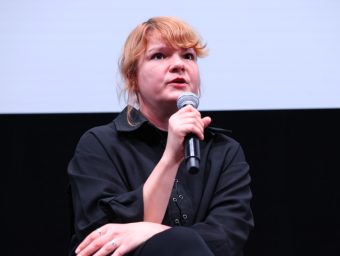



“Arrested Memory” Q&A – Crowd-Pleaser Spent 20 Years in Development
© 2026 TIFF
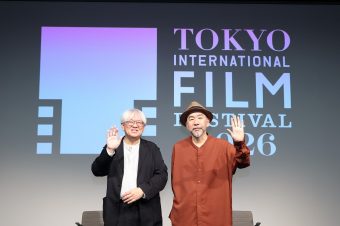
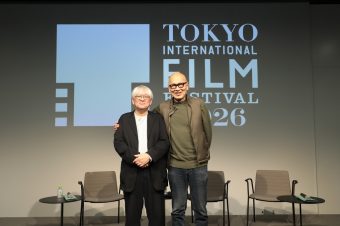
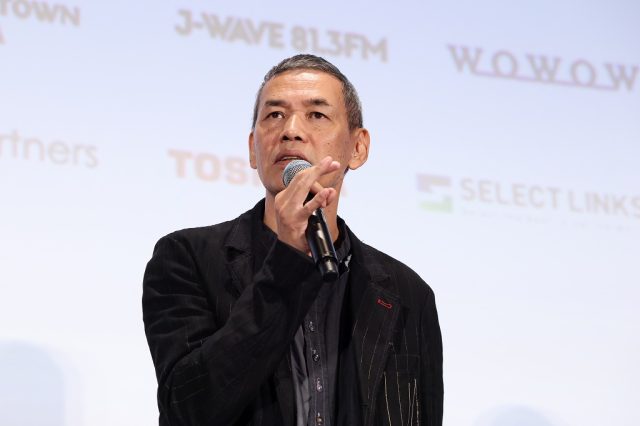
From left: SABU (Director) – Photo from the Q&A session on October 27
Useless cops, charming criminals, and Tsutsumi Shinichi: Sabu’s new Arrested Memory has everything that his fans around the world love about his films, especially early works like D.A.N.G.A.N Runner (1996) and Postman Blues (1997). Full of comedy, action and quirky characters, the latest title from the beloved genre auteur is destined to delight audiences everywhere. After its world premiere at the Venice International Film Festival, Arrested Memory had its Japan premiere at the 39th Tokyo International Film Festival in the Gala Selection. Following the screening on November 2, Sabu took the stage for a Q&A session that earned nearly as many laughs as the film itself.
Shot entirely in Taiwan, where it has been nominated for a staggering 11 Golden Horse Awards, Arrested Memory centers on celebrated police detective Lee (played by Taiwanese star Ethan Juan), who is assigned to save the kidnapped son of a wealthy Japanese businessman, played in high dudgeon and a white Elvis-style suit by Tsutsumi. A premise reminiscent of Kurosawa’s High and Low (1963), however, quickly turns into a series of mishaps due to Lee’s big secret: trauma-triggered amnesia. Despite the film’s breezy runtime (under 90 minutes!), Sabu packs an extraordinary number of chases, characters and complications into the story, which follows Lee and his men and the kidnappers and the parents of the kidnapped child as things spiral out of control.
Appearing for the Q&A, Sabu explained that he had been developing the project for nearly 20 years. It originally began in 2007, when he spent six months in Berlin and brought the project with him. “Up until then, I had generally been making one film a year,” said Sabu, “But I realized that the process [of Arrested Memory] was taking a little too long, and before I knew it, more than a year had passed. I had since returned to Japan, and over a year had gone by.”
After that, he continued pitching the project in Busan, Paris and New York and considered the possibilities of casting such actors as Song Kang-ho and Tsutsumi Shinichi for the lead role, but nothing came of it. The project finally began to move forward when he collaborated with producer Ichiyama Shozo, now the Programming Director of the Tokyo International Film Festival, on Chasuke’s Journey (2015).
Since he wrote the script nearly 20 years ago, he was worried that the overall atmosphere of the film might feel dated. But when support came in from Taiwan, he realized that shooting in Taiwan would allow him to incorporate the film’s retro feel as part of its aesthetic. Sabu noted, “Taiwan has a very nostalgic atmosphere, yet at the same time, there are incredibly modern, urban areas. These two contrasting qualities coexist, giving the place a very unique character. I felt that this was a perfect match for the film.”
As for casting, hiring Ethan Juan for the lead role was a quick decision for the director, who said, “Ethan was recommended by the producer, but I’d seen his films and thought he would be a great fit. His age was just right for the role, too, so I really wanted to work with him. I asked him to read the script, and he said that he wanted to be involved as well.”
This was evidently a demanding role for Juan, who had to learn to play the piano, practice judo—which he deploys often in scary/zany action sequences—and even take dance lessons, for a crucial scene set in a nightclub. Recalled the director, “Ethan really did not want to dance. He kept resisting it. He would show up for rehearsals, but he wouldn’t really put in the effort. Eventually, I was told that I would have to convince him myself. So I went and talked to him. I explained that having that dance scene in the film would make a huge difference. Finally, he agreed to give it his best shot.” (And what a shot it is.)
Originally, there was an ending where Lee played the piano, but the director decided to go with a less heavy last scene, and had to cut it entirely. Juan’s three months of practice were for nought. “At Venice, I apologized [to Juan],” said Sabu, but he told me it was completely fine and that he thought the ending was perfect.” But Sabu left the possibility open of reinstating the scene in the director’s cut.
Gala Selection: Arrested Memory
Q&A Guest: SABU (Director)














Recent News