


Asian Students’ Film Conference Tsukamoto Shinya Masterclass – Neither a Limited Budget nor Tiny Crew Can Halt a Maverick Creator
© 2026 TIFF
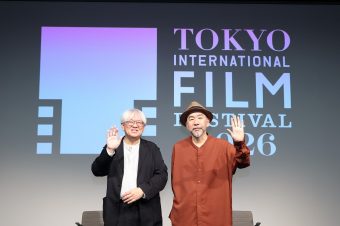
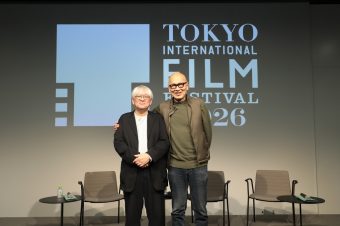
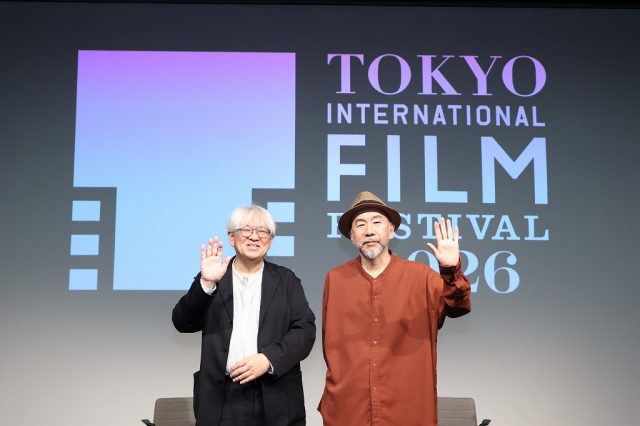
From left: Ichiyama Shozo (Programming Director, Tokyo International Film Festival) and Tsukamoto Shinya (Filmmaker)
From left: Ichiyama Shozo (Programming Director, Tokyo International Film Festival) and Tsukamoto Shinya (Filmmaker)
Japanese director and actor Tsukamoto Shinya, whose latest film, Mr. Nelson, Did You Kill People?, premiered at the Venice International Film Festival and has been drawing sellout crowds for over a month in Japan, sat down with TIFF Programming Director Ichiyama Shozo at the 39th Tokyo International Film Festival on November 2 for a masterclass, wowing the young filmmakers who were taking part in TIFF’s Asian Students’ Film Conference.
Since making his feature-length directorial debut with the 1989 release of Tetsuo: The Iron Man, Tsukamoto’s career has been defined by subversive masterpieces created on the indie outskirts of Japanese cinema. That work has been made with small teams and smaller budgets (with only a few exceptions), over decades, from the cyberpunk metal-infused films like his debut and its sequels to his more modern war anthology, which began with 2014’s Fires on the Plain and continued to his latest release—although it is not, as he later explained, a low-budget, limited-crew film.
The auteur thus has expertise working on sets of all scales, with both major productions and self-funded teams, often acting himself just to get the work made, and acting in the work of others (most notably, Martin Scorsese’s Silence (2016)) to help raise funding. Asked how he would define his almost 40-year career, he explained that Tetsuo: The Iron Man was his professional debut, but he had grown up using 8mm and 16mm cameras to create shorts with friends. He later worked in theater, exploring different ways to tell stories in various ways before his defining debut project took shape.
“I’ve been doing work with independent film ever since my early days,” said Tsukamoto. “I worked at a company making commercials at one point, but before that I was making 8mm films. When I took that job, I couldn’t get over my desire to keep making movies. So, together with some theater friends, we handled all the cast and crew roles and worked hard to make The Adventures of Electric Rod Boy (1987). We’d been using a simple 8mm camera at the time, so I upgraded to a 16mm camera and made Tetsuo: The Iron Man with a group of about eight people.”
This was an era before computer-generated effects were widely accessible, so the director instead leaned into the special effects of tokusatsu, and used discarded materials to create the metal body of Tetsuo himself. A critic who enjoyed an early screening of the film helped take it internationally to the Rome Fantafestival, where it earned the top prize and put Tsukamoto on the creative map.
Tsukamoto’s second film, Hiruko: The Goblin (1991), couldn’t be more different. It was funded by SEDIC, a part of Saison Group, and was a major film production involving veteran filmmakers from TOHO. It would go on to receive a nationwide marketing campaign and release.
“Working on Tetsuo, it was made with such a small team, but once people saw it the film really caught their attention,” recalled Tsukamoto. “That was when I got a phone call from producer Nakazawa Toshiaki [from SEDIC] asking if I wanted to make a movie. Ever since I was a teenager, I had this dream of making a major movie, so I was honored, but then I wondered with some worry what work they were wanting me to do. Then I heard it was Morohoshi Daijiro’s manga, and I loved his work. I immediately said, ‘please let me do it!’”
Since Hiruko: The Goblin, however, most of Tsukamoto’s works have been independently produced by Kaijyu Theater, his own production studio, with limited funding but with ultimate creative control remaining in Tsukamoto’s hands. Films like Bullet Ballet (1998), A Snake of Jun (2002), Vital (2004) or even Nightmare Detective (2006) share a common thread. These contemporary tales use special effects and horror elements while keeping the human drama front and center.
A notable shift for the director, however, came with 2014’s Fires on the Plain. Based on Ooka Shohei’s novel “Nobi,” also turned into a film by Ichikawa Kon in 1959, this began an exploration of war that has continued to his latest work. Tsukamoto told the students that he had wanted to make it for many years prior to its eventual production and release. When he realized that Japan was forgetting about World War II and thus sleepwalking toward repeating its past mistakes, he knew the time was right.
“I’d wanted to make my own film of this superb work, Fires on the Plain, since I was a teenager. I’ve always thought Ooka Shohei’s book was great,” explained Tsukamoto. “While I’ve never felt like I wanted to go to a real war, I always felt like this story brought the world of war so close to me, and because war is this universal theme for everyone, I kept putting off making it because I wanted to do the story justice. After all, I’d wanted to make this film in my teens and 20s, and I’d done all this research and even gone to the Philippines [where the film is set] in my 30s while planning it, but because I got married and because of money I couldn’t.
“By the time I reached my 50s, the one movie I felt I really wanted to make was Fires on the Plain. I felt that if I was going to make it, however, I’d need more money for the budget than for any other film in my career to that point. But that financing never came. At the time, I also felt like I was watching Japan slip closer and closer toward war and felt very anxious about that, and I felt that I had to make it now, no matter what form it took. I would have to make it even as an independent movie, and I wondered if I should make it as an anime, or go like a YouTuber to the Philippines alone and film the scenes there with a camera and then return to Japan and begin making the film from there.”
The final outcome was that he made the film independently, with Tsukamoto acting in the lead role to keep costs low. Doing so also allowed for a smaller team to go to the Philippines for filming (with a crew of only six, including two local support members). Production on the film would end up being one of the most difficult of his career, but the discussions surrounding military issues at the time helped it to reach audiences. Even now, the film receives regular Japanese screenings around the anniversary of the end of World War II.
His latest film, Mr. Nelson, Did You Kill People?, stands out for being a rarity within Tsukamoto’s illustrious career. This is only his second film to be shot almost entirely in English, with Japanese actor Lily Franky also speaking in English on the film. It’s also based on a real story, whereas most of his works have been fictional.
“When I was making Fires on the Plain, I was reading a variety of books, and one of them was a non-fiction book by Allen Nelson, which was written from his perspective as a perpetrator of the violence in war,” Tsukamoto told the students. “It really surprised me. When I first started writing the film, my main priority was only to ensure I could make the story come together, but I felt that if I could get this movie produced, it would be one of great importance. However, it was just too big of a project, with such a massive scope, that even though I’d been able to find some clever ideas to cut costs before, this was something I couldn’t make by doing that, so I put it aside.
“At one point, a major studio involved in overseas production came to me asking if I had any projects, so I pitched this film, and they agreed to do it. We worked on it for about a year but it didn’t quite work out with them. Then they introduced me to the president of Kinoshita Group. When I pitched it to them, I had a more experienced producer doing that. Things didn’t go too well at first, but I suppose they were willing to give it a chance. Then right after that, the pandemic hit, and since we needed American actors and we had to deal with long production schedules in the US, things didn’t go as planned. From the time we first learned we could make it, it wound up taking about six years.”
Delays caused by the Covid-19 pandemic led him to make 2023’s Shadow of Fire first, which Tsukamoto felt was fortuitous because it allowed him to tell another powerful antiwar story.
After the floor was opened to audience questions, Tsukamoto was asked what he thought it took to make a first film: “Is it easier to make a debut movie today that it was to make it in the 1980s?”
“I think compared to the time I was first making movies, this era is a better time to start filmmaking,” Tsukamoto said. “When I wanted to make a film that would be shown in theaters rather than just an independent film, I felt like I had to use at least 16mm film. But making a movie on 16mm was incredibly expensive. Back when I made Tetsuo, the money I spent wasn’t on the actual movie itself, since even if it was a movie about metal, we collected all the metal parts ourselves, so the only costs we had were the camera itself and film development fees. Now, you don’t really need the film or the cost of developing, you can just use a digital camera and get consistently strong images, and you can use the sorts of editing software almost anyone has access to.”
In many ways, the worlds Tsukamoto and these students share are relatively intertwined—and with Tsukamoto continuing to fund most of his films through his own studio at a small scale, only his decades of experience are perhaps mark the difference between the maverick creativity necessary to create a film without financial backing. It’s that lesson Tsukamoto wished to impose: “If you understand what it takes to make a film, you can plan it, and you’re willing to get involved in all aspects of its creation, those are the keys if you want to bring your work to life. In the end, you just have to go and make it.”
Asian Students’ Film ConferenceAsian Students’ Film Conference Masterclass
Asian Students’ Film Conference Tsukamoto Shinya Masterclass
Panelist: Tsukamoto Shinya (Filmmaker)
Moderator: Ichiyama Shozo (Programming Director, Tokyo International Film Festival)














Recent News