


Jury and Award Winners Press Conference 39th TIFF Honorees Share First Reactions Diversity in Film; Unanimity in Gratitude
©2026 TIFF
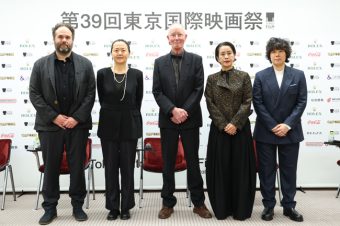
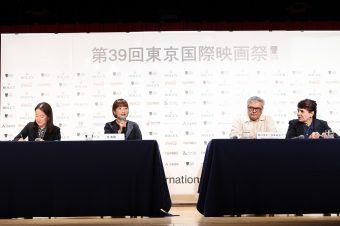
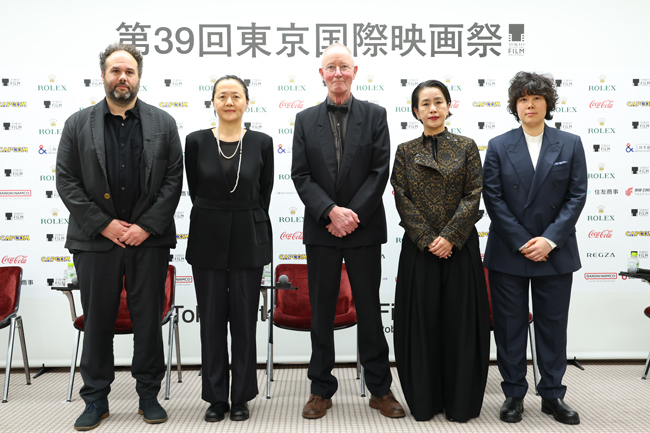
From left: Yov Moor, Oh Jungwan, Rolf de Heer, Watanabe Makiko and Alex Lo
From left: Yov Moor, Oh Jungwan, Rolf de Heer, Watanabe Makiko and Alex Lo
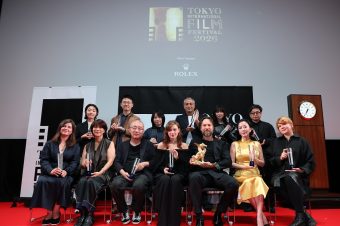
At a press conference with the festival’s jury members and award winners following the 39th Tokyo International Film Festival Closing Ceremony on November 4, journalists gathered to hear reactions and ask a range of questions.
The members of the International Competition Jury, Rolf de Heer, Alex Lo, Oh Jungwan, Watanabe Makiko and Yov Moor, appeared first.
Asked to share a few words about his expectations before the festival, Jury President de Heer noted, “I had no expectations before the festival. Each film is different and there were 15 films. I didn’t think it would be so complex, but I feel good about what we did.”
Commented Juror Oh Jungwan, “I feel relieved. I’m happy to deliver the awards safely and I’m ready to go back home. I need Korean food. But I really, really enjoyed the wonderful jurists, and watching 15 films.”
Juror Yov Moor concurred, “I felt the same. I was very happy to work with the TIFF team. It was very rich to share with the jury different points of view. Sometimes we agreed, sometimes not. But it was very rich, thank you.”
Juror Watanabe Makiko noted, “I echo what the others have said. Working with my fellow jury members, we were able to frankly share opinions, good and bad, and we were happy to exchange opinions and able to discuss them. I have a sense of fulfilment and relief. I was especially happy to see the joyful faces of the winners.”
Juror Alex Lo then said, “I came with an open mind, and I was able to make new discoveries. I’m also really happy with the jury experience.”
Asked what the jury had looked for and what they felt the status of the cinema is now, de Heer responded, “In a situation like this, it’s important to see what the film gives me. It’s a very different way of looking at it than usual. This is a small collection out of a vast number of films made. From this collection, you can judge that cinema is very varied and that people still want to make films that matter. That’s very important.”
Mentioning the intense political discussions that have taken place at other festivals, one journalist asked how they felt about the lack of such discussions at TIFF.
De Heer responded, “It was for me a welcome refuge from the horror that is the world, although today (election day in the US) has been very good.”
Asked about the selection process for the Award for Best Actor (won by Narita Ryo for Two Cigarettes, Three Nights), and whether there had been other candidates, Watanabe responded, “I’m an actor myself, so it’s difficult to talk about. When we went through each film there were other candidates we discussed.”
Another question concerned the lack of surprise in the selection of the Award for Best Director (won by Lisandro Alonso for Double Freedom), since he is an established filmmaker. “We did consider a number of options,” said de Heer. “I don’t know that simply being or not being established should come much into consideration. There are other considerations we had to have. It’s a bit of a balancing act. It was a very fine piece of work, worthy of recognition and the director was worthy of the prize.”
Asked what the main points had been for choosing the films, especially the choice of Sister Brother Manhole Cover as the Tokyo Grand Prix winner, de Heer noted, “There are no points, there was an evolution that took place over a period of time. We came into it with different thoughts about a lot of films and considered different prizes. Then we worked toward a point where we were all happy with the selections made for the prizes.”
Tokyo Grand Prix, The Governor of Tokyo Award winner Milcho Manchevski (Sister Brother Manhole Cover) was not present in Tokyo, but actors Sara Klimoska and Filip Trajkovikj appeared on his behalf.
Said Klimoska: “I want to thank TIFF for having us and the jury for this amazing award. We feel honored to be here with you tonight. It’s such a special feeling to work on a film for a long time and then it turns out more beautiful than you ever imagined. I’m really excited and happy.”
Said Trajkovikj, “The award is a lot lighter than the manhole cover, but it’s very heavy due to its meaning. It’s something that’s very special to have in your hands, something you’ve been aiming for your whole career. We’re very honored.”
Asked how they worked as a team, Klimoska said, “It was very difficult but very exciting. Filip and I have worked together before in film and theater, so it was a great experience. We had three weeks of rehearsals, and spent time working on the comedy.”
As an actor, said Trajkovikj, “As an actor, the only thing you want on set is to have a partner who gives you as much as you give them. That’s the only way to have a perfect duo. Sara and I have worked together a lot and our energies are very similar, and that’s how we can build things that look authentic.”
Added Klimoska, “And with a director like Milcho, everything comes easily.”
Asked whether they’d found any interesting manhole covers in Tokyo, Trajkovikj said, “You have really great manholes here.”
Interjected Klimoska, “But we couldn’t take any, they’re stuck. They’re beautiful. The manholes are amazing. Here, they’re perfect, just like the roads. In Macedonia, the roads are all different levels. You can see the different cultures through the manhole covers.”
Director and producer Sun Xun (Magic Atlas), winner of the Special Jury Prize, was asked whether it’s more difficult to make films in China now, since the film was made in Singapore.
Sun responded, “There are technical reasons. When you make films in China, you must be assessed and get permission beforehand, which takes a long time. Then you might miss important film festival deadlines. A production company in Singapore was interested in making it, so that’s why we made it in Singapore.”
Director Jelena Maksimović (Until the Day Ends), winner of the Award for Best Artistic Contribution, was asked about the recent regime change in Serbia, and why she’d decided to make the film centered on student protests.
Maksimović said, “Since I started writing the script, there were always demonstrations, because protests are very common in my region. I was interested in two young people falling in love, who come from the same context but with different chances in life. I was also involved in the demonstrations, on the streets together with the students and citizens, so it was natural for me to adopt that in the script. I wouldn’t say it’s a film about protest, that’s the context. I feel very honored to be here. This is my first visit to Tokyo and I’ve really enjoyed staying here.”
Hu Ling (The Night That Binds Us), winner of the Award for Best Actress, was asked whether she feels less nervous now, since she had expressed her jitters before the world premiere, when she was very worried about how the audience would react.
Said Hu, “I’m feeling very lucky right now that this film was accepted by the Japanese audience, as well as jury members. I was so nervous before the premiere because this was the first time I’d seen the film myself. There were some difficult scenes, and I was worried about how the audience would take it. Now I feel very honored.”
Asked whether the film could be shown in China, and what the significance of the role had been for her, Hu responded, “I was so moved when I first read script, I couldn’t stop crying. This was about a woman that no one cares about, and she had the courage to love somebody. In the world right now, it might be difficult for her to actually do that. As an actor, I enjoyed the project. I don’t generally give my own ideas to the director, I just perform to the fullest of my ability.”
Director Mishima Yukiko (Two Cigarettes, Three Nights), answered questions on behalf of Narita Ryo, winner of the Award for Best Actor.
Noting that the concept of “guy friends” (a direct translation of the Japanese title) was very popular in Japan, a journalist asked Mishima whether she thought a platonic relationship was possible. Mishima responded, “I think this is a film about seeing. Do we see the world, the people around us? In the film, I think Mr. Narita is always seeing, not just physically; he watches Kanna and looks at her artworks. He cannot save her, but he can steer her to see with a different perspective.”
She also mentioned that she’d told the actor about his award and he was very happy.
Director Tareq Daoud (Serife Tavsan), winner of the Asian Future Best Film Award, was asked about his protagonist, who was sacrificing herself to be a good wife and mother, and whether he’d created the character to support women like her, he said, “I wrote this with a Turkish cowriter, and we both had grandmothers who had a life closed off to them. They were loving, caring figures, but they had unfulfilled dreams. The inspiration comes from them, and it’s about giving infinite love but also having regret for what could have been.
“We are from the exiled generation, so it’s not so much about the present situation in Afghanistan. Forty years of war has destroyed society, so it’s not the same country that we left. Our grandmothers are even more relevant, but we tried to make a universal movie.”
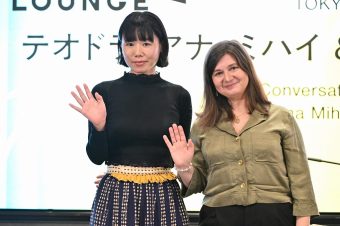
Director Teodora Ana Mihai (Heysel 85), winner of the TIFF Audience Award, was asked how she’s feeling about making such an impact on the audience.
She said, “Very special. As a filmmaker, we make films to reach an audience and hope they will resonate with them. It’s so rewarding, that it traveled so far. I feel very grateful. It’s a Belgian story that happened 40 years ago, but it was embraced by Japanese society. Art builds bridges between cultures. It was heartwarming, people were coming up to me to ask for selfies and autographs, and they had images from my previous films. There is a very attentive and knowledgeable audience in Japan, and it’s very special.”
Director Tanaka Miki (silver express), winner of the Nippon Cinema Now Best Film Award, was asked her feelings about the rapid changes in LGBTQ and sexual identity awareness in Japan. Said Tanaka, “I wanted to make this film because I thought it was difficult to understand others with different values, and I thought it was very important. Especially between people with aromantic and romantic feelings, I think the division is very clear. That’s what I’m depicting in the film.”
She was asked whether she hoped the film would help change the understanding of asexuality, which had long been defined as a mental illness, Tanaka responded, “I did not use the word ‘asexual’ at all in the film, because I didn’t want to define people. I’m hoping for a world that doesn’t need definitions like this. If you define me or other people, you’re narrowing the understanding of each other.
“In all my films, I don’t quite understand the characters I created. By communicating with my actors, I try to understand them, and we build the characters together.”
Director Matsumura Shingo (Between Us), winner of the Nippon Cinema Now Special Jury Prize, was asked how he had directed his young actors in a film about the “invisible conflicts” that exist in everyday life.
Matsumura said, “I made sure that we had rehearsals before we started shooting. I knew certain scenes would be very difficult, so we took time beforehand. We also put aside the script and talked about unrelated things. I set rules for the two young actresses that while they had lines in the script, they should question those lines. If they felt they couldn’t say them, I asked them what they would say instead.”













Recent News