


39th TIFF Announces Full Lineup, Heralds A New Era of Borderless Filmmaking
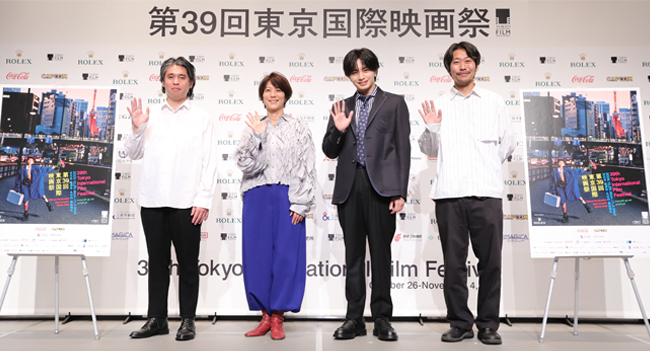
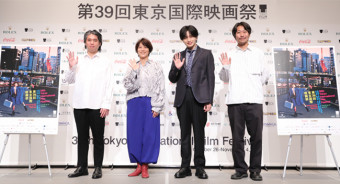
The Tokyo International Film Festival (TIFF) today unveiled its full lineup at Spiral Hall in Tokyo, announcing the films in its five competitive sections along with many other highlights of its 39th edition, in a spirited ceremony spotlighting TIFF’s commitment to the past, present and future of cinema.
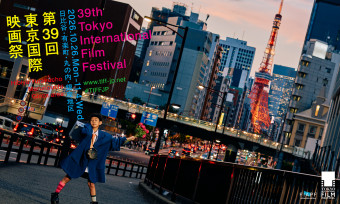
Guided by this year’s theme, Connecting — Cinema Connects Us to the World Beyond, TIFF will create opportunities for filmmakers and film lovers to connect in a diversity of ways. The 10-day festival, running from October 26 through November 4, will feature over 200 films and extensive related events in the Hibiya-Yurakucho-Marunouchi-Ginza area of Tokyo. As in prior years, TIFF’s opening Red Carpet is scheduled to take place on Hibiya-Nakadori Avenue. TIFFCOM, the affiliated marketplace for film and audiovisual content, will be held concurrently for three days, from October 28 to 30.
As previously announced, the 39th TIFF will open with the Asian premiere of Takahisa Zeze’s much-anticipated Sukiyaki, the untold story behind the historic song that topped the Billboard charts and remains one of the world’s best-selling tunes; and close with the Korean zombie thriller Colony, directed by Yeon Sang-ho of Train to Busan (2016). The festival’s Centerpiece will be Yamazaki Takashi’s Godzilla Minus Zero, the epic sequel from the Oscar®-winning Visual Effects team behind Godzilla Minus One.
The press conference began with opening remarks from TIFF Festival Director Hisamatsu Takeo, who explained that preparations for this year’s festival had been guided by several key goals: showcasing the diverse and vibrant appeal of cinema; supporting Japanese and Asian filmmakers for global success; helping female filmmakers to achieve greater global success; and becoming a gateway to the world stage.
Said Hisamatsu, “TIFF aims to become a festival that everyone will want to experience, from dedicated cinephiles who watch dozens of films each year to casual moviegoers who may see only one or two. We want people to gather here in Tokyo, as they do in other major festivals, and make this year’s TIFF a springboard for an even more exciting 40th edition next year.”

TIFFCOM Managing Director Ikeda Kaori discussed the 23rd edition of the market, to be held at the Hamamatsucho-kan Building, a short ride from TIFF’s main venues. Ikeda highlighted TIFFCOM’s role in facilitating business negotiations and networking opportunities for a wide range of content, including AI products and data analytics. She also noted that 24 film/animation projects from around the world would participate in the Tokyo Gap Financing Market, with the aim of securing international co-productions and funding. Two projects that participated last year have been selected for TIFF’s lineup. The Tokyo IP Market, which deals with film adaptation rights for published works and remake rights for existing films, will facilitate matchmaking with leading IP buyers in Tokyo after a successful collaborative launch at the Cannes Film Festival in May.
The members of TIFF’s three main competitive juries were then announced. This year’s International Competition Jury will be headed by filmmaker Rolf de Heer, based in Tasmania, Australia, who has worked as a writer, director, and producer for more than four decades. He will be joined on the jury by Tokyo/New York-based producer Alex Lo, Korean producer Oh Jungwan, DI colorist Yov Moor, and Japanese actor Watanabe Makiko. The Asian Future Jury will be comprised of producer Eiko Mizuno-Gray, filmmaker Fujimoto Akio, and producer Yulia Evina Bhara. The members of the Nippon Cinema Now Jury will be film critic Mathieu Macheret, Myriagon Studio executive Murata Chieko, and Sabrina Baracetti, president of the Udine Far East Film Festival.
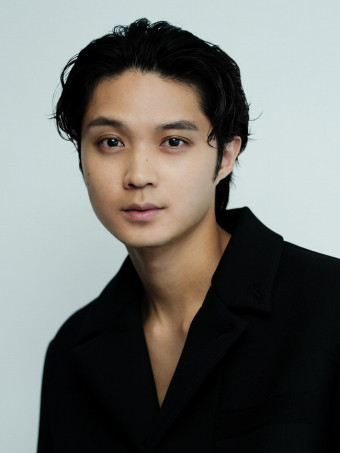
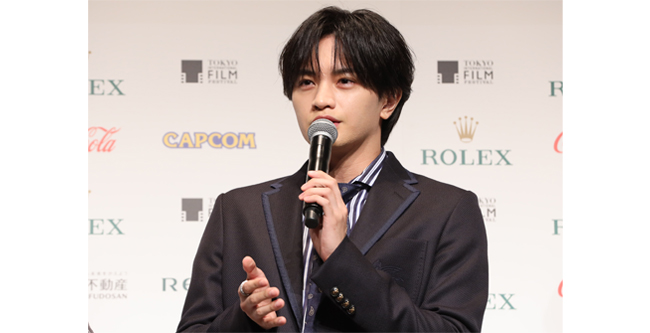
39th TIFF Festival Navigator Nakajima Kento attended the press conference to share his thoughts and enthusiasm about fulfilling his role. An avowed film lover, the actor-singer expressed his surprise about the appointment and noted, “I wondered, am I really the right choice? I really love film, but I’m an idol, as well as expanding my acting career. Films are something that can expand your life. As an actor, I can experience things I would never experience in real life. Film festivals are occasions for all the people in the industry and film lovers can come together and be inspired. A lot of dreams can be realized because there are so many opportunities provided by the gathering.”
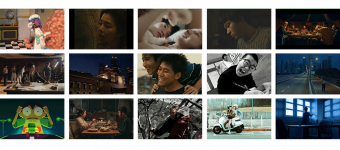
Programming Director Ichiyama Shozo then introduced the 15 films selected for the Competition section, representing 31 countries/regions and multiple genres, as well as new work from veteran auteurs Milcho Manchevski, Garin Nugroho, and Bahman Ghobadi. Romanian director Teodora Ana Mihai is joining the TIFF Competition lineup for the third time (after Traffic and La Civil). He noted, “When I think about the commonalities between the films as we see a lot of polarization and a sense of crisis, an increasing number of filmmakers are looking back at the past—not out of mere nostalgia, but to use historical events to decode the contemporary psyche and understand our world on a profound level.”
The three Japanese films in this year’s Competition section were also introduced, with directors Ikeda Akira (The Canary’s Lullaby), Mishima Yukiko (Two Cigarettes, Three Nights), and Yamamoto Akira (The Intertwining) taking the stage for brief comments.
Ichiyama also introduced the eight films in the newly competitive Nippon Cinema Now section, which includes a range of genres by new and established filmmakers, with one highlight, showing out of competition, being Yamazaki Riverside – Over an Actor’s Shoulder, about the legendary star Yamazaki Tsutomu (High and Low, Tampopo, Departures).

TIFF Senior Programmer Ishizaka Kenji followed by introducing the 10 films in competition in the Asian Future lineup, noting that, “There’s a common thread among these films in that, in this unstable world today, they’re depicting families and the small communities that surround us.”
Ishizaka also discussed CROSSCUT ASIA+, a new section established this year in collaboration with The Japan Foundation that will showcase a selection of films from Southeast Asia. Ishizaka commented, “This is a renewal of a program we previously operated with The Japan Foundation before it ended during the Covid pandemic, and we will be showing five new and old films under the theme of Side by Side, curated by two young programmers.”
The films in TIFF’s Gala Selection, World Focus and Japanese Classics sections were also revealed, along with those in the Asian Students’ Film Conference and other special screening programs in the festival.
Programmer Shimizu Yu then introduced the seven films in the Women’s Empowerment section, as well as a special event featuring two celebrated female cinematographers, Her Gaze, exploring their creative approaches. She also introduced the three films in the Youth section, aimed at younger audiences. She mentioned, “This is the 10th anniversary of the TIFF Teens filmmaking workshop, and there will also be other youth-oriented events aimed at children.”
Animation Programming Advisor Fujitsu Ryota unveiled the films in the Animation section, which will feature screenings of nine new Japanese and international works, including several that wowed audiences at the Annecy International Animation Film Festival. One of the works includes live action, a documentary that focuses on the creation of animated films. There will also be a themed section with works by female animation directors. Said Fujitsu: “I believe this year’s lineup features an even more diverse collection of unique films than in previous years, so I hope many people will enjoy them.”
Also highlighted during the press conference were the previously announced Kurosawa Akira Award, TIFF Ethical Film Award and Kashiko Kawakita Award, along with the newly established Tokyo Talk event featuring Zeze Takahisa, Masterclasses by Zeze and Wayne Wang, a talk session with Ulrike Ottinger, Academy in Tokyo—an event featuring the senior leadership of the Academy of Motion Picture Arts and Sciences (AMPAS)—and a wide range of other festival-related events and programs. The conference concluded with a Q&A session.
Highlights from the speakers’ comments and the Q&A session are as follows:
Comments from Competition Directors
Ikeda Akira, Director of Competition film The Canary’s Lullaby
“This is the world premiere of my film and I’m very grateful for this opportunity. My impression of TIFF is that the city of Tokyo and film are deeply connected. The film was shot on Kinmen Island, Taiwan, and is inspired by an almost unbelievable true story about an old lady who takes in a nonhuman creature and cares for it. I wanted to depict the depths of human affection.”
Mishima Yukiko, Director of Competition film Two Cigarettes, Three Nights
“I’m very honored that we were selected. I always feel like I’m relearning cinema during TIFF, and this is always a special time for me.”
“My film Two Cigarettes, Three Nights is about a painter who has been unable to paint her own pictures. She reunites with a male friend and spends three nights with him, prompting her to reconsider how she sees the world and what she wants to paint. I began thinking about the film during the Covid pandemic, when I was reflecting on what it means to be close to another person.”
“I watch a lot of films and after I watch other films at TIFF, I get to go drinking with filmmakers from around the world. It’s really the pinnacle of my film-viewing experience every year.”
Yamamoto Akira, Director of Competition film The Intertwining
“This is the first time I’ve shown one of my own films at TIFF. I’ve been to TIFF many times to watch films. I’ve shown two of my films at PIA Film Festival, and I was always thinking I wish I could also show them in TIFF. I also participated in the TIFF Teens filmmaking workshop, so I have a lot of memories here.”
“My film The Intertwining is based on a novel in which two women whose fates are switched, focusing on the lives of these two women, one Japanese, one Korean. It was shot in Japan and Korea and I hope you’ll enjoy watching my two great actors.”
Q&A session
During a Q&A session at the end of the press conference, the three Japanese directors in the Competition section appeared along with Festival Navigator Nakajima Kento.
Nakajima was asked about his plans for the festival, along with serving in an official capacity. “Last year I had the opportunity to take part in a discussion with casting director Debra Zane. This year, I hope to have opportunities to talk with directors, casting directors, producers and other film professionals,” he said, “and I also hope that, through me, more people will become interested in cinema.” He added that watching a film in which his grandfather had appeared made him appreciate the delicacy of Japanese filmmaking and its attention to individual movement, qualities he has also heard overseas directors express respect for.
Asked about the challenges of shooting on Kinmen Island in Taiwan, Ikeda Akira (The Canary’s Lullaby) said that “Apart from myself, the producer and cinematographer, the crew was from Taiwan and postproduction was also done in Taiwan, so it didn’t feel like we were shooting ‘a Japanese film.’ I learned so much from the Taiwanese crew. Going forward, I think there will be a lot more international co-productions, because there’s a lot we can learn from working with people from other countries.”
Mishima Yukiko (Two Cigarettes, Three Nights) noted, “I think Covid gave filmmakers time to reflect deeply on history, society and their own perspectives, and many of those films are now emerging. One of the strengths of Japanese cinema is the technical expertise that crews have built up over many years, combined with the strong messages individual directors want to convey.”
Asked for their advice about choosing which films to watch at TIFF, Ikeda said, “I think I would recommend choosing randomly, by timeslot, and that allows you to have a serendipitous encounter with film.” Said Mishima, “I go through the brochure and look at the film images, rather than reading the synopses. I want to trust my instinct when I’m choosing.” Said Nakajima, “I like love stories, and film gives us two hours to experience something different. So I choose films with romance themes.” Yamamoto said, “I want people to see a film that they’re not familiar with in terms of story or director. If you choose that way and watch a film that isn’t known to many people, you can experience the difference between that and other films.”
Hisamatsu Takeo and Ichiyama Shozo then appeared for questions from the press.
Asked whether worsening Japan-China relations had affected submissions from China, Ichiyama responded: “The overall number of submissions from China did not seem to change very much. My impression is that we received fewer mainstream entertainment films featuring major stars than last year, while the number of independent, festival-oriented submissions was largely unchanged. I don’t know whether that difference was caused by Japan-China relations. We select films based on their quality rather than nationality.”
Hisamatsu spoke about the impact of geopolitical issues: “Of course we can’t avoid the issues, but we look at the films themselves. We’re very open, we welcome films as long as they’re interesting, and consider them worthy of consideration no matter where they’re from.”
Ichiyama added, “There may be circumstances in some countries that make it difficult for films to be submitted, but that is beyond our control. Our position is to remain open and select from the films that are submitted to us.”
Asked about the reduction in the number of theaters available to screen TIFF’s films, Ichiyama explained, “This isn’t simply a question of the cinema business; issues such as aging buildings are also involved. We will need to consider the venue situation for next year.”
Added Hisamatsu, “Next year is our 40th anniversary, so we are considering being more flexible about venues and potentially expanding beyond the current Hibiya-Yurakucho-Marunouchi-Ginza area.”
Finally, Hisamatsu was asked what type of festival he’s hoping to create. “A film festival is a celebration, so I want to heighten that sense of festivity. Mr. Ichiyama and I worked together at Shochiku, but our strengths are different: he is more art-house oriented, while I come more from the entertainment side. I want to strike a balance between the two, with this year leaning more toward entertainment like our exciting Opening and Closing Films. Film festivals have two roles: bringing international cinema to Japan and taking Japanese cinema out to the world. With international attention on Japanese films increasing, I would like to strengthen that outbound flow of Japanese films and filmmakers.”
The 39th TIFF will screen 204 films (up from 184 last year) from October 26 to November 4, 2026.
39th TIFF at a Glance
Festival Lineup
• Total number of films: 204 (last year: 184)
• Countries and regions represented: 112 (last year: 108)
• Japanese films: 83, or 40% (last year: 41%)
• World premieres: 35, or 17% (last year: 22.5%)
• Films directed or co-directed by women: 47 (41 directed by women and 6 co-directed by women and men), or 23% (last year: 23.4%)
Each director is counted only once, regardless of the number of films.
Competition Submissions
• Total number of submissions: 1,892 (last year: 1,970)














Recent News