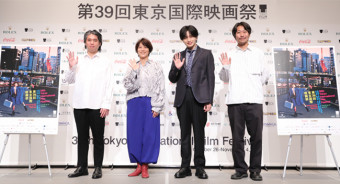



39th TIFF to Launch Three New Initiatives
Promoting Japanese Cinema: Nippon Cinema Now Competition
Fostering Asian Collaboration: CROSSCUT ASIA+
Honoring Female Cineastes: Kashiko Kawakita Award
The Tokyo International Film Festival (TIFF), scheduled to take place from October 26 to November 4, is pleased to announce a series of new initiatives launching with its 39th edition. These efforts aim to enhance the global reach of Japanese cinema, foster next-generation talent and co-creation across Asia, and promote the preservation and continuation of diverse film cultures.
This autumn, TIFF is taking three major steps toward shaping the future of the festival: establishing new awards in the Nippon Cinema Now section, introducing a new co-creation section focused on Southeast Asia, and creating a new award to honor women who have been making vital contributions to the film industry.
1.Two New Awards Established for Nippon Cinema Now
Dedicated to introducing the current state of contemporary Japanese film, helping to expand its international recognition, the Nippon Cinema Now section will launch two new awards this year: Best Film and the Special Jury Prize.
With global attention on Japanese cinema reaching new heights, these awards were created to provide stronger support for undiscovered Japanese talent— from promising newcomers to visionary veterans—and to bring their work to worldwide audiences. To ensure a truly global perspective and to discover these talents, the jury will include international industry experts alongside Japanese jury members. Through these awards, the festival hopes to inspire new potential in Japanese cinema.
Comment from Hisamatsu Takeo, TIFF Festival Director
Through the establishment of a new competition within the Nippon Cinema Now section, we will shine a spotlight on exceptional new Japanese talent and introduce them to the world. We hope to give creators the courage to take on their next challenge while empowering them to advance to the global stage. By serving as a platform for emerging talent to take flight, the Tokyo International Film Festival aims to contribute to the growth and development of the Japanese film industry.
2.Launch of a New Section: CROSSCUT ASIA+
In a joint initiative with the Japan Foundation (JF), TIFF is introducing CROSSCUT ASIA+, a brand-new section highlighting Southeast Asian cinema. Carrying forward the mission of the former festival section, the Japan Foundation Asia Center presents CROSSCUT ASIA (2014–2019), CROSSCUT ASIA+ will feature a curated selection of films jointly chosen by vibrant film programmers from both the region and Japan, centered around a unique, annual theme from their distinct perspectives.
For this inaugural edition, programmers Raslene (Indonesia) and Ueda Masayuki (Japan) present six films under the theme ‘Side by Side,’ featuring a lineup that ranges from timeless classics to recent releases.
Through screenings and engaging panel discussions organized by the two programmers, with Markus Nornes serving as advisor, we hope to offer an opportunity to collectively reflect on current initiatives across Southeast Asian nations. Although geographically side by side, these countries hold distinct histories; this program explores how memories are passed down, film production by collectives, and how accumulated experiences and narratives re-encounter one another through the medium of cinema.
Filipiñana
Directed by Rafael Manuel (2026 / Singapore, UK, Philippines, France, Netherlands)

©Filipiñana
A diorama-like country club reflects Philippine societal structures. New worker Isabel must adapt to a systemic heaven-and-earth gap.
Four Seasons in Java
Directed by Kamila Andini (2026 / Indonesia, France, Netherlands, Norway, Saudi Arabia, Singapore, Poland)

After prison, Pertiwi returns home. In a stifling village, together with fellow outcasts, she searches for a way to live again.
Becoming Human
Directed by Polen Ly (2025 / Cambodia)
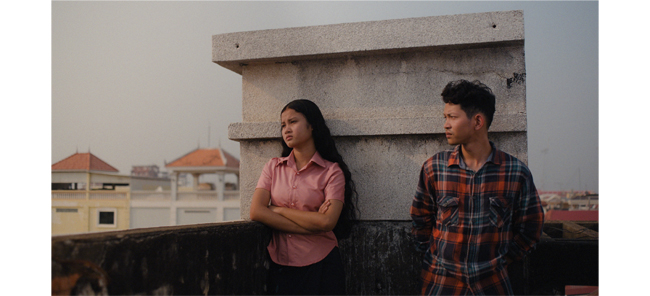
As Cambodia rapidly urbanizes, an old cinema’s guardian spirit must decide between rebirth or remaining a homeless ghost with a human friend.
Turang
Directed by Bachtiar Siagian (1957 / Indonesia)
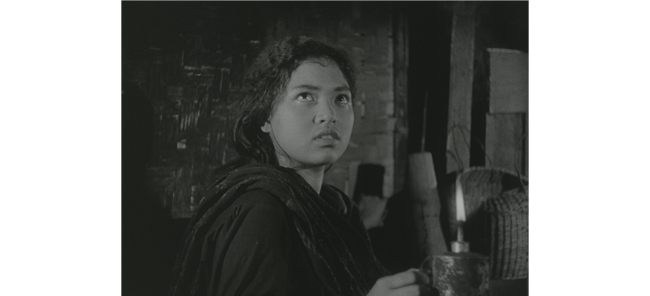
In wartime Tanah Karo, wounded Rusli and caregiver Tipi fall in love. When a traitor aids Dutch attacks, people must resist and live on.
Small Hours of the Night
Directed by Daniel Hui (2024 / Singapore)
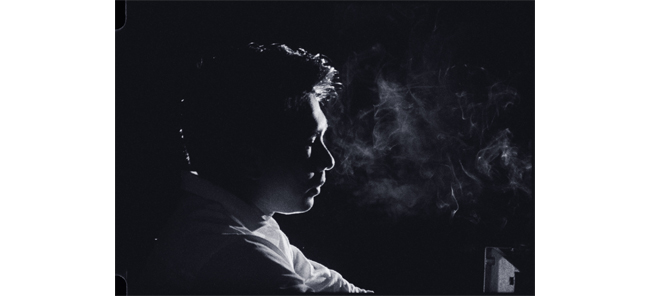
A woman is interrogated by a man over one long night, revealing the story of a bizarre tombstone trial in Singapore after independence.
Behind The Flickering Light: The Archive
Directed by Hafiz Rancajale (2013 / Indonesia)
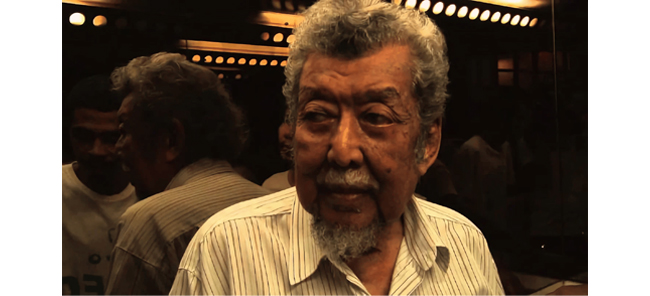
Misbach Yusa Biran left directing to preserve films, founding Sinematek Indonesia. Today, we revisit his journey in establishing the archive and its deteriorating state through the screen.
Programmers’ Profiles
Ueda Masayuki

The Program Director at Waseda Shochiku, a Tokyo repertory cinema, since 2010. Mainly presenting double features, he programs 50 weeks/year of new and classic films, with 2,000+ films programmed to date. HHe joined the Japan Foundation’s An Open Draft – Asia Film Programmers Lab in 2024, leading to Anocha Suwichakornpong × Payal Kapadia: Gazes That Open the World in 2025 as part of An Open Draft. He is also active in film production: Super Happy Forever (line producer), Black Ox (screenwriter).
Raslene

A Jakarta-based film programmer and visual artist. She develops film programs for Jakarta Film Week. She also served on the selection committee for the 2026 SeaShorts Film Festival. An alumna of CICAE Arthouse Cinema Training, Cinemata Community Curators Programme, and the Japan Foundation’s An Open Draft – Asia Film Programmers Lab, her practice spans independent and community programs, research, and cultural initiatives.
Advisor Profile
Markus Nornes

A film scholar, programmer, and filmmaker, and Professor Emeritus at the University of Michigan. He is a Coordinator at the Yamagata International Documentary Film Festival, having working there since 1990. He has published eight books on Japanese cinema, documentary, and film translation and film festival studies. A founding member of the Kinema Club collective, he serves on journal boards, sits on juries at international film festivals, has organized many conferences and delivered over 100 lectures worldwide.
3.Establishment of the Kashiko Kawakita Award to Honor Women in Cinema — The Inaugural Awardee: Hata Sahoko
Passing the Legacy of “Madame Kawakita” on to Future Generations.
The Kawakita Memorial Film Institute has established the Kashiko Kawakita Award. Conceived as a recognition “by women, for women,” this achievement award honors individuals who have been advancing film culture both in Japan and internationally. It pays tribute to Kawakita Kashiko—affectionately known as “Madame Kawakita”—a trailblazing female figure who bridged East and West through cinema. Before and after WWII, she introduced excellent European films to Japan and championed the preservation of Japanese film heritage, playing a pivotal role in founding the Japan Film Library Council and laying the groundwork for the National Film Archive of Japan. Bearing the name of this cinema pioneer, the award is dedicated to honoring women. The recipient is selected by an all-female committee, with the official presentation held as part of TIFF’s Women’s Empowerment section.
The inaugural laureate is acclaimed film critic Hata Sahoko. Beginning in the 1950s, Hata was instrumental in purchasing and bringing landmark French films to Japan, such as Breathless (À Bout de Souffle), Purple Noon (Plein Soleil), and Mon Oncle. As a journalist and critic, she has devoted decades to enriching cultural exchange through cinema.
Comment from Hata Sahoko
When I was first approached about receiving the 1st Kashiko Kawakita Award, my initial decision was to decline. Throughout the pre-war and post-war eras—a time when women were not even permitted to participate—Mme. Kawakita was active with her own distinct eye for importing, exporting, and above all, selecting films. Her legacy remains a page in film history, as well as a chapter in the history of women. On one occasion, Mme. Kawakita whispered to me: “As women, there are so many moments where we must endure, aren’t there?” They were profound words indeed. It is precisely because I felt a compelling desire to pass this story on that I resolved to accept the award.
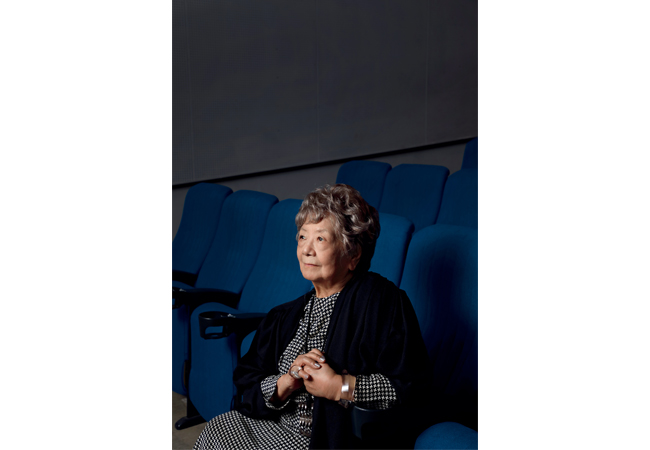
Published in: Fujin Gahou
Photo: Nawa Makiko
Hata Sahoko Profile
Born in 1931 in Tokyo, Hata Sahoko is a renowned film critic. She moved to France in 1957 as a journalist before returning to Japan to join the film distribution firm Shingaiei Haikyu Co., Ltd. Relocating back to France as an acquisition executive, she spent years bridging the Japanese and French film markets. Her first major acquisition was Jacques Tati’s Mon Oncle, followed by landmark titles such as Jean-Luc Godard’s Breathless and René Clément’s Purple Noon.
Throughout her career as a journalist and critic, Hata has remained a vital voice in bringing international cinema to Japanese audiences. She is the author of several books, including “Screen Mode and Actresses”, “Paris ni Ikiru Onna-tachi (Women Living in Paris)”, and “Eiga, Rondo no youni (Cinema, Like a La Ronde)” (co-authored with Yamada Koichi). Her 2012 autobiographical novel, “Kage no Bubun (The Shadowed Part)”, was awarded the Japan Film Pen Club Award.
Born in 1931 in Tokyo, Hata Sahoko is a renowned film critic. She moved to France in 1957 as a journalist before returning to Japan to join the film distribution firm Shingaiei Haikyu Co., Ltd. Relocating back to France as an acquisition executive, she spent years bridging the Japanese and French film markets. Her first major acquisition was Jacques Tati’s Mon Oncle, followed by landmark titles such as Jean-Luc Godard’s Breathless and René Clément’s Purple Noon.
Throughout her career as a journalist and critic, Hata has remained a vital voice in bringing international cinema to Japanese audiences. She is the author of several books, including “Screen Mode and Actresses”, “Paris ni Ikiru Onna-tachi (Women Living in Paris)”, and “Eiga, Rondo no youni (Cinema, Like a La Ronde)” (co-authored with Yamada Koichi). Her 2012 autobiographical novel, “Kage no Bubun (The Shadowed Part)”, was awarded the Japan Film Pen Club Award.
Selection Committee for the 1st Kashiko Kawakita Award
Sakano Yuka (Executive Director, Kawakita Memorial Film Institute)
Yamasaki Toshi (CEO/President, Toho-Towa Company, Limited)
Onda Yasuko (Senior Writer, Yomiuri Shimbun)














Recent News